Every few years, a city makes a bet on culture. A neglected neighborhood is identified. A flagship performing arts center — or a museum, or a theater complex — is commissioned. Renderings circulate. Leaders cite the expected catalytic effect: the restaurants that will open, the residents who will arrive, the economic transformation that will follow. Sometimes that transformation happens. More often, it doesn’t — or it happens so slowly, and so partially, that the institution ends up generating event traffic without generating neighborhood momentum, and the community that took the political risk of the investment is left asking what went wrong.

If you are considering a major cultural investment — or you are an institution wondering why your building hasn’t produced the district you were promised — the answer is almost certainly not the architecture. It is the planning that preceded the architecture, or more precisely, the planning that didn’t happen.

The Planning Gap

The most common failure mode in cultural district development is straightforward: a city invests in a building without investing in a plan. The “build it and they will come” premise is intuitive — great institutions do attract audiences — but it systematically misreads what makes a district, as opposed to a destination. A destination draws people for scheduled events. A district gives them a reason to be there at all hours: to live, to eat, to work, to return. That quality doesn’t emerge from a single building, however distinguished. It comes from comprehensive planning that integrates the cultural anchor with the full range of uses — residential, retail, hospitality, civic — that give a neighborhood life beyond performance hours.

When that integrated planning doesn’t happen, the pattern is predictable. Surrounding blocks stay underutilized. The institution’s immediate neighbors are parking structures and vacant lots rather than the street-level activity that reinforces the cultural investment. Developers who might have committed to the district hold back, waiting for evidence that the neighborhood has turned. Detroit’s Paradise Valley and Indianapolis’s Indiana Avenue are cases where the loss of authentic district identity has meant that more than $27 million in revival investment in Detroit, and two decades of effort in Indianapolis, have produced only partial recovery. What eroded was not a building. It was the urban ecosystem — the layered mix of uses, community ownership, and cultural history — that gave those places meaning.

Cultural districts succeed when the arts anchor a genuinely mixed neighborhood — residential, commercial, hospitality, civic. A district that is exclusively arts-focused after 8 p.m. is not a district. It is a venue cluster. The difference, for investors and institutions alike, is the difference between a real estate bet and an infrastructure investment.

What the BAM District Actually Looked Like

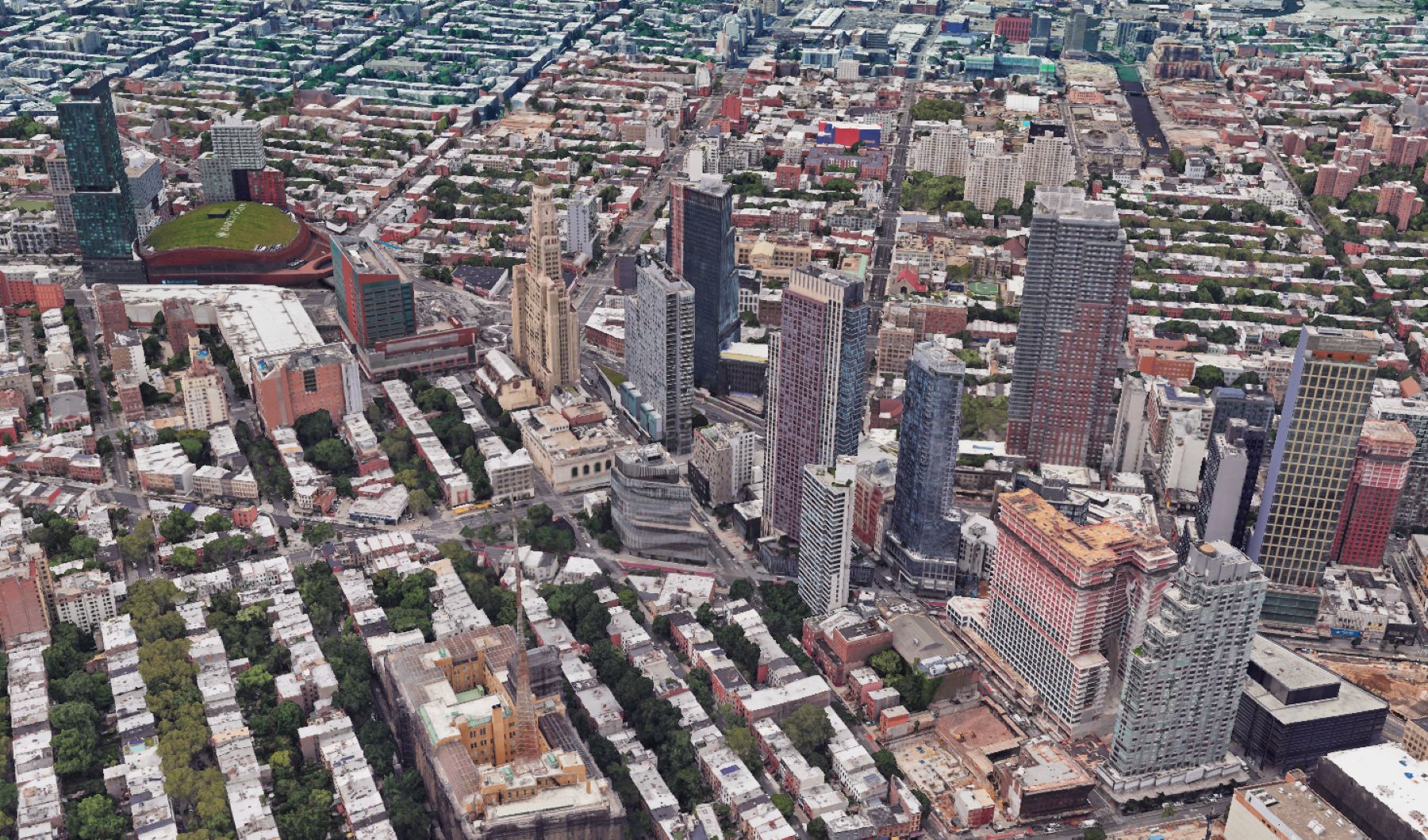
The Brooklyn Cultural District around the Brooklyn Academy of Music is now held up, correctly, as one of the most documented urban transformations in American cultural history. What is less often noted is how close it came to failing, and how long the effort took.

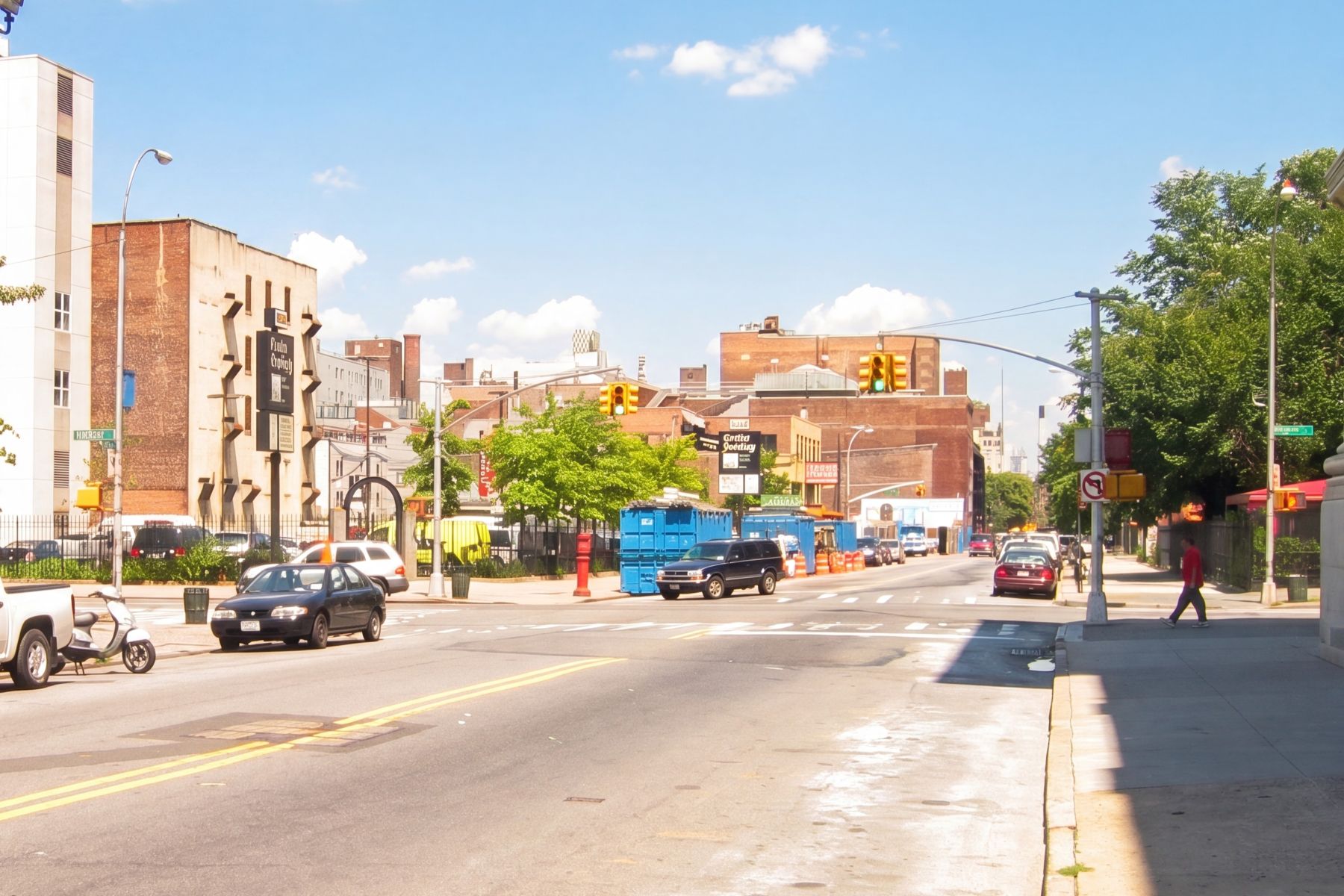
By 1999, BAM’s director Harvey Lichtenstein had spent years trying to persuade artists, community leaders, and city officials to support a cultural district on the vacant lots and drab streetscapes around the concert hall. The response was mixed and in some quarters hostile. Longtime residents worried that a district built around an internationally known institution would effectively re-engineer the neighborhood’s cultural personality and displace the community that had built it. Those concerns were not unfounded and were not resolved quickly. The fear — voiced directly in community meetings and in the press — was that the district would import housing for Manhattanites rather than the longtime residents who had built the neighborhood.

The 2004 Downtown Brooklyn Development Plan was the formal turning point. It rezoned the broader downtown for mixed-use development, established the Brooklyn Cultural District as a defined sub-area at its cultural anchor, and increased the Floor Area Ratio cap for cultural and educational institutions inside it. The plan called for targeted public investment in cultural facilities. By coincidence, 2004 was also the year H3 Hardy Collaboration Architecture was founded — and the year H3’s first independent commission at BAM, the $7.5 million Peter Jay Sharp Building façade restoration, was completed.

The planning proceeded unevenly through the rest of the 2000s, and the gap between ambition and delivery was wide. In 2007, master plans by Rem Koolhaas / OMA and Diller Scofidio + Renfro generated significant press attention and genuinely glamorous renderings — a vision of what a world-class cultural precinct might look like if everything went right. A soaring new visual and performing arts library designed by Enrique Norten was announced as a signature anchor. The renderings circulated. The coverage was enthusiastic. And then, one by one, the ambitious elements stalled. The library proved financially unfeasible and was cancelled. The 2008 housing crisis froze the mixed-income residential development central to the original plan. Scaled-back projects replaced headline projects. By 2010, a full decade into the formal planning effort, the New York Times was still running stories headlined “After Delays, An Arts District Grows in Brooklyn.”
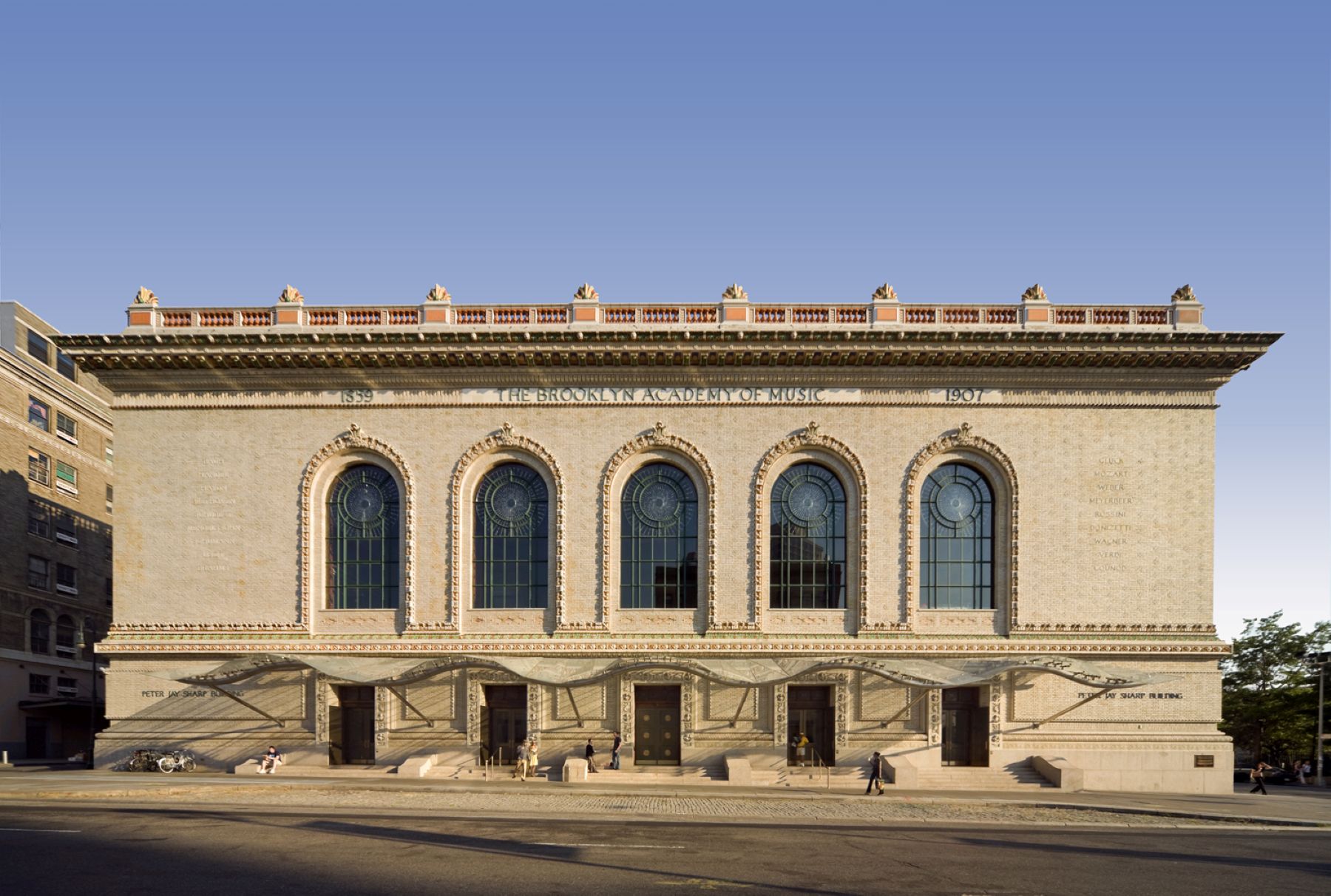
While the headline plans faded, H3 was doing something less glamorous and more consequential: building actual spaces for the arts, one commission at a time. The Peter Jay Sharp Building façade restoration was the first major exterior restoration of the 1908 Herts & Tallant building — recovering the original polychromatic terra-cotta cornice stripped away more than forty years earlier, restoring the brickwork and stained glass, and introducing the undulating glass canopy that became one of the district’s most recognized street-level gestures. It announced, without fanfare, that BAM was committing to its neighborhood for the long term.

The Richard B. Fisher Building, completed in 2012 at $50 million (with a $32 million city contribution), brought pedestrian life to Ashland Place — a pivotal link connecting the Harvey Theater to the Mark Morris Dance Studio and the emerging constellation of venues to the south — and contained the Fishman Space, an approximately 300-person fully-flexible performance facility that gave BAM a venue scaled for emerging work and rehearsal-to-stage continuity. On the occasion of its opening, Seth W. Pinsky, then president of the city’s Economic Development Corporation, told the Times: “For a long time, people wondered if anything was happening.” The Polonsky Shakespeare Center for Theatre for a New Audience opened the following year ($33.6 million, 2013) — sited diagonally across Lafayette Avenue from BAM, a 299-seat fully-flexible theater in deliberate conversation with BAM’s ornate Beaux-Arts masonry — giving TFANA its first permanent home after 28 years of nomadic production and confirming that the district had achieved the institutional density required to function.

“The idea of a 299-seat theater with a totally flexible configuration, with this kind of height and dimensions and acoustics, hits a sweet spot for a lot of directors and artists… What Theatre for a New Audience provides is very attractive.”

— Kate D. Levin, Commissioner, NYC Department of Cultural Affairs  |  TFANA project submittal

These three H3 commissions — approximately $91 million in total construction value within the Brooklyn Cultural District — mark thirty years of continuous institutional partnership with BAM, anchored at the BAMCafé and Rose Cinemas commissions of 1997. The Harvey Theater (1987 HHPA conversion) stands as predecessor work the firm’s staff carried forward into the H3 era. The result is now documented across the broader Downtown Brooklyn renaissance:

Downtown Brooklyn 20-year transformation, 2004–2024

$24B
Private investment
(2004–2024)
$2.4B
Public investment
(2004–2024)
22,000+
New housing units
since 2004 rezoning
+57%
Population growth
since 2004

Source: Downtown Brooklyn Partnership, “Downtown Brooklyn: Twenty Years of Growth” (July 2024)

The 2024 figures above frame the larger transformation in which the Brooklyn Cultural District functions as the cultural anchor sub-area, supported by 32 million additional square feet of new development, 86,000+ private-sector jobs (up from 62,000 in 2012), 35,000+ higher-education students, and 9 new hotels totaling 1,900+ rooms. Within that frame, the Brooklyn Cultural District itself has received more than $187 million in targeted public investment over the same 20 years, with H3’s three commissions representing a significant share. Downtown Brooklyn, which the New York Times described as a “9-to-5” neighborhood as recently as 2021, is now characterized by Regina Myer, the Downtown Brooklyn Partnership’s president, as “much more mixed-use” — active around the clock, with retail, restaurants, hotels, and residential towers that didn’t exist when the district planning began.

No assignment at BAM has been too small or too large. That is not a marketing phrase. It describes a planning posture: the conviction that district transformation is built through sustained engagement at every scale, across decades, and through the setbacks as well as the successes.

“The enormous renaissance that’s taken place in Brooklyn has been driven largely by the identification of the borough with the artists who live and work there and the audiences who see work there. So it makes sense to recognize that value through substantial public investment.”

— Kate D. Levin, Commissioner, NYC Department of Cultural Affairs  |  New York Times, June 2012

“We’re trying to answer the question of how can a great, global cultural institution make a meaningful impact on its local community. We think this is sort of a model of how a large institution can offer much more flexibility and service.”

— Karen Brooks Hopkins, President, Brooklyn Academy of Music  |  New York Times, June 2012
BAM Peter Jay Sharp Building façade restoration, Brooklyn, NY, by H3 Hardy Collaboration Architecture
BAM Peter Jay Sharp Building façade restoration — Brooklyn, NY — H3 Hardy Collaboration Architecture

The Greensboro Proof of Process

When the community has already voted down your performing arts center twice, no amount of architectural distinction will overcome the political deficit. That was the challenge H3 faced in Greensboro, North Carolina in 2011, retained with AMS Planning and Research after two failed bond referendums to develop a new master plan. Our first job was not design. It was consensus — a structured engagement process that surfaced the specific objections defeating prior proposals and produced a concept that directly addressed them.

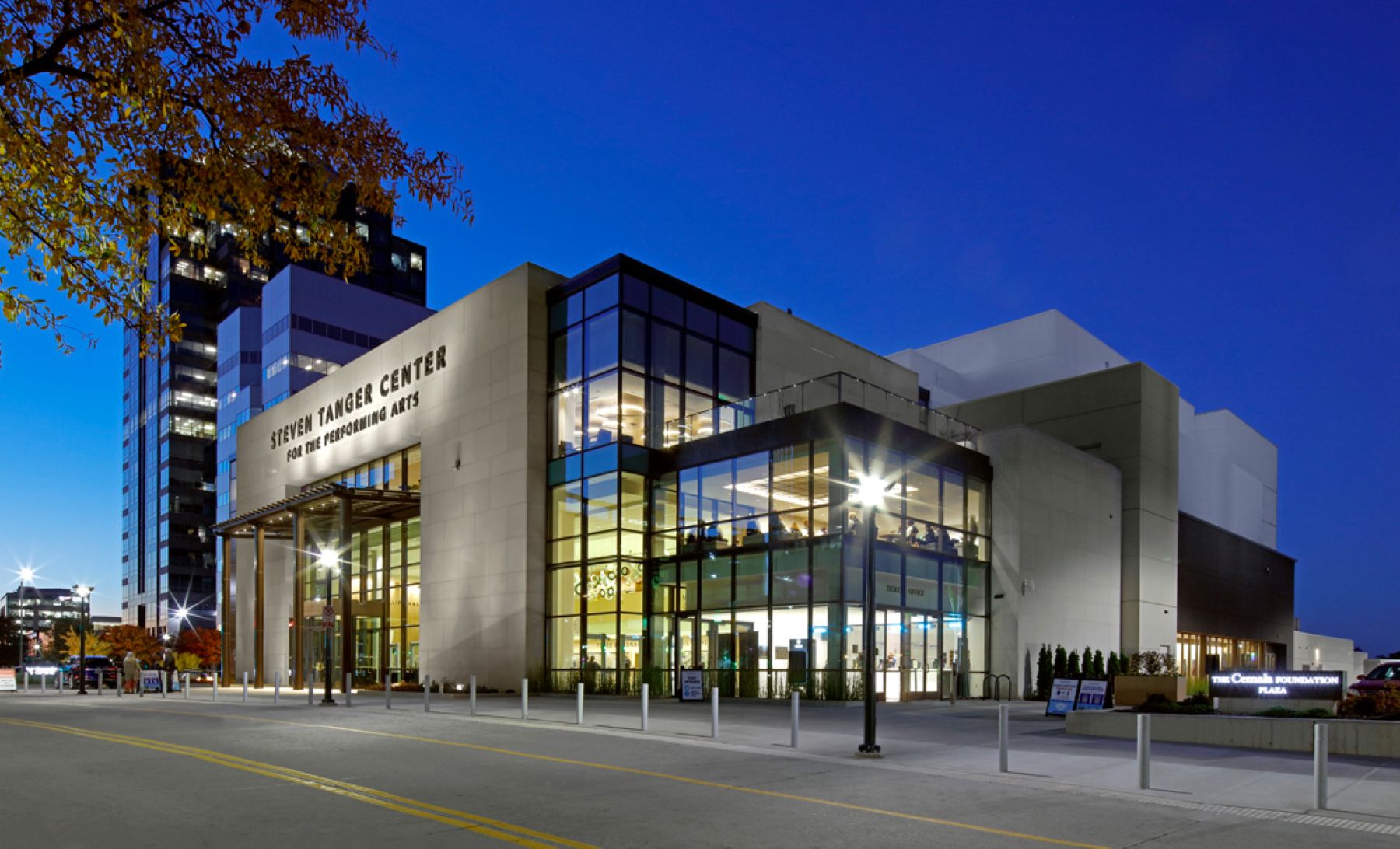
The Steven Tanger Center for the Performing Arts opened in September 2021. It has since generated $553.5 million in total economic output in a single fiscal year, attracted major touring Broadway productions to Greensboro for the first time, and welcomed its one-millionth patron within three seasons — all without costing taxpayers a dollar to build. That outcome was made possible entirely by the planning investment that preceded every design decision.

Steven Tanger Center for the Performing Arts, Greensboro NC, by H3 Hardy Collaboration Architecture
Steven Tanger Center for the Performing Arts — Greensboro, NC — H3 Hardy Collaboration Architecture

The Engagement Pattern at Scale

Greensboro is one of three documented community-engagement-anchored commissions that demonstrate the H3 approach at scale, in partnership with planning specialists. In addition to AMS, we’ve had a long relationship with Webb Management Services on developing cultural plans. The Round Rock, Texas cultural plan (2010) generated 3,500 separate opportunities for community input and was unanimously adopted by the Round Rock City Council in May 2011. The Denver Performing Arts Complex master plan (2015) recorded 2,000 separate interactions during the planning process. The pattern is consistent: when the engagement work is done before the design work, the design work succeeds.

The Four-Quadrant Methodology

Across more than two dozen district-scale engagements — and through decades-long planning partnerships with AMS and Webb — H3 has refined a framework that holds four dimensions of district planning in balance. They are not sequential phases. They are co-equal lenses, weighed against one another from day one of any cultural-district commission.

Programming

Buildings designed for the institution’s existing audience rather than the broader community produce destinations, not districts. Programming reflective of changing demographics — born from place, people, and economic market — must be the first lens applied. Establish community consensus about what the district needs to accomplish before any architect is retained. This is the lens most often missing, and its absence is the most reliable predictor of underperformance.

Organizational Planning

A cultural building is a liability if the institution cannot program, staff, and financially sustain it. The most beautifully designed performing arts center fails if the organization running it lacks the management capacity, programming strategy, and financial model to fill it. The over twenty-years long partnerships between H3 and its management consultants exists precisely because organizational capacity must be addressed alongside design, not after it.

Financial Modeling

Capital structure and operating pro forma must account for spillover effects, which are frequently the most powerful part of the investment case. The retail, restaurant, residential, and hotel development a successful cultural district generates is not incidental to the financial argument — it is the financial argument. A performing arts center that drives $553 million in annual regional economic output is not a cultural subsidy. It is infrastructure that happens to perform.

Physical Planning

Design enters as one quadrant, not as the center of the process. Architecture matters, but its civic effectiveness depends entirely on the quality of the strategic, organizational, and financial work that precedes it. Architecture that precedes strategy produces buildings. Architecture that follows strategy produces districts.

The Six-Task Planning Sequence

Within the Four-Quadrant framework, H3’s master-planning process is organized as six sequential tasks, each with defined inputs, deliverables, and decision gates. The sequence has been deployed consistently from Round Rock (2010) through Greensboro (2012) and the Denver Performing Arts Complex master plan (2015) and across every cultural-district master plan since: Gather existing conditions, place, people, and data; Assess physical and programmatic vision; Program development and planning approaches with cost modeling; Design alternatives with phased infrastructure horizons; Refine the site plan and the implementable initiatives; Implement through sequencing, organizational structure, and financial model.

Sphere-of-Influence Analysis

Threading through all four quadrants and the full six-task sequence is a diagnostic H3 deploys at every scale: Sphere-of-Influence Analysis. The planning process maps every cultural anchor against a five-minute walking radius — typically 125 acres at the scale of a downtown PAC — systematically inventorying institutional, civic, commercial, transportation, and natural assets surrounding it. This is not a context survey. It is the disciplined precondition for siting decisions, the mechanism that moves district planning out of the cultural silo and into the wider urban analysis where district-scale outcomes are actually decided.

The Investment Case

A three-year Gallup study of 26 American cities found that resident attachment to community is a leading indicator of local GDP growth. That attachment is cultivated, significantly, by the quality and accessibility of cultural life. The most innovative companies choose locations based on their ability to attract talented people. Talented people choose locations based on the quality of cultural life alongside economic opportunity. Communities that invest in cultural infrastructure at the district scale — not as amenity, but as infrastructure — are making a competitive investment whose returns compound over decades.

The $24 billion in private investment that has reshaped Downtown Brooklyn since the 2004 rezoning did not happen despite the cultural investment at its core. It happened because of it. The Tanger Center’s $553 million in annual economic output in Guilford County did not happen because Greensboro built a beautiful building. It happened because the planning process that produced the building was designed, from the beginning, to generate exactly that result.

That is what cultural infrastructure planning looks like when it works. The Brooklyn Cultural District took the better part of three decades, with real setbacks along the way. The difference between a district that transforms a neighborhood and a building that occupies one is almost entirely a function of what happened before the first design sketch — and who was in the room when it happened.

The question for any community considering a cultural investment is not whether to build. It is whether to plan. The buildings are the easy part. The planning — the community engagement, the organizational strategy, the financial framework, the district vision that holds all of it together — is where the outcome is decided. We have been in that room. We know what the work requires.

About H3 Architecture

H3 Architecture is a New York-based architecture and planning firm with more than six decades of legacy in cultural, civic, performing arts, and historic preservation practice. H3 is part of the Arquitectonica family of firms and has won more than 40 design awards recognized by the AIA, the New York Landmarks Conservancy, and regional design organizations nationwide.

H3 can assist on cultural district master plans, performing arts center feasibility studies, and civic facility planning engagements. Contact us at h3hc.com.