The Frost School of Music at the University of Miami has grown over more than eighty-five years into a national leader in higher music education, presenting over 350 performances a year. To match that ambition it needed a building it had never had — one appropriately sized for mid-scale presentation, equipped with contemporary technology, and conceived as a laboratory for innovative ways of learning, performing, and sharing music. H3, working with Arquitectonica, designed the Knight Center for Music Innovation as a fusion of architecture and technology: the best space in the region for chamber, solo, choral, and small-orchestra performance on a university campus.
The building grows from a relationship that long predates it. H3’s predecessor firm prepared the master plan for the Frost School’s quadrant of the Coral Gables campus and designed the Marta and Austin Weeks Music Library & Technology Center that anchors it. The Knight Center is the newest chapter in a campus story the firm helped author — and the first University of Miami building delivered under the H3 / Arquitectonica relationship, with H3’s theater and cultural specialization joined to Arquitectonica’s Miami home-ground depth.
Two Halls, Two Purposes
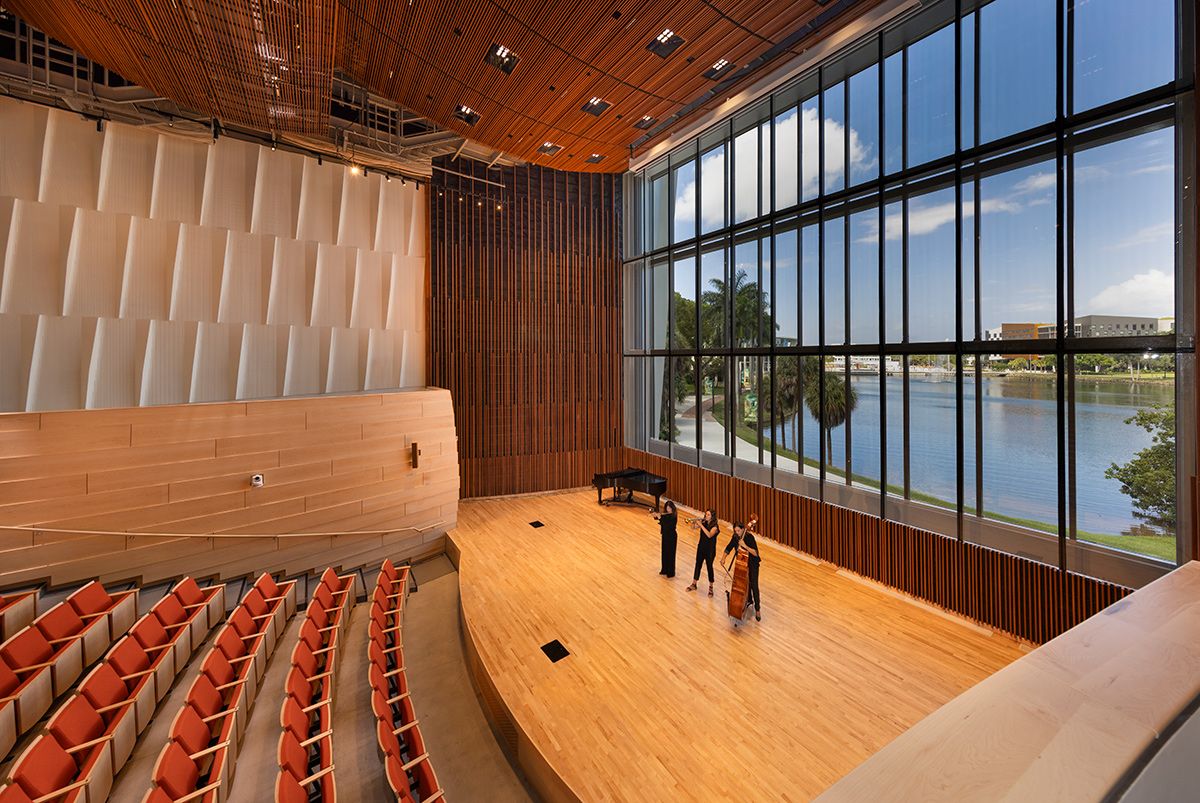
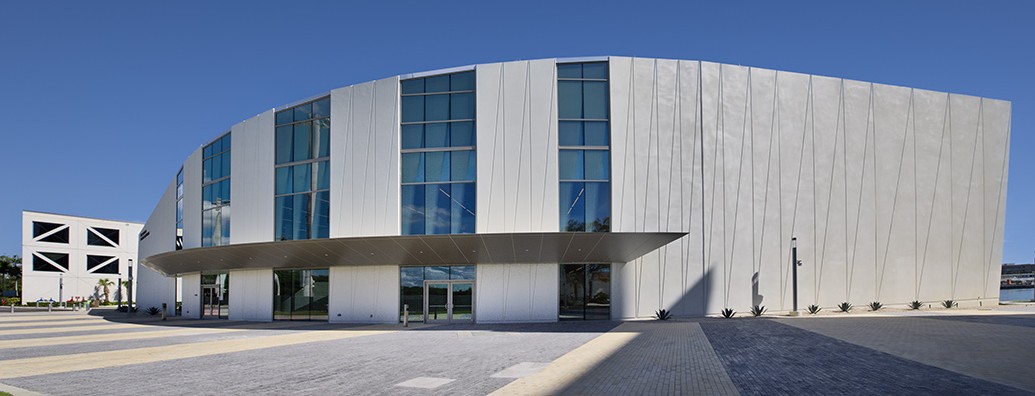
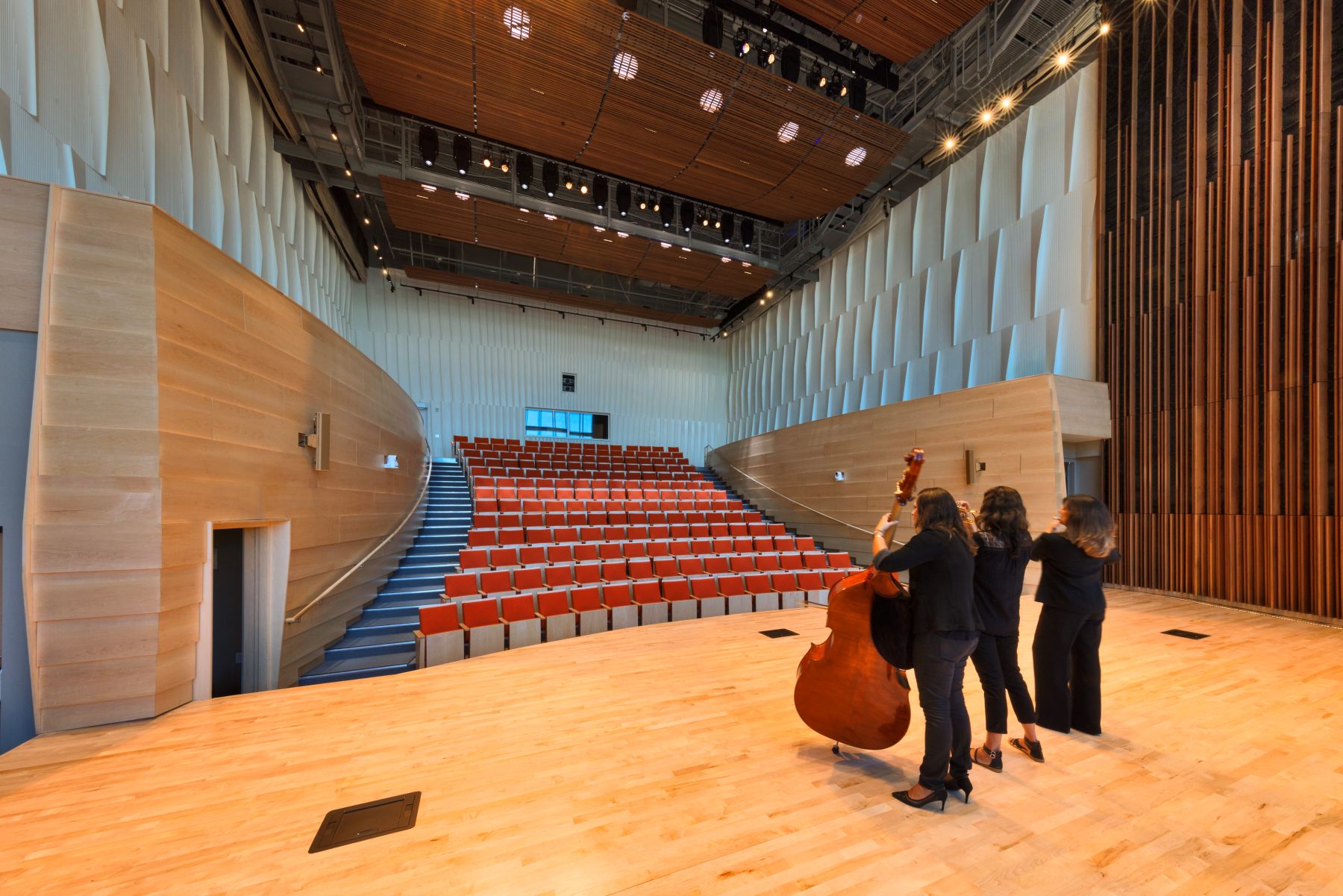
The roughly 25,000-square-foot, two-story building is organized around four components: a recital hall, a rehearsal and innovation stage, a band of practice rooms and common space, and the lobbies and support that bind them. The Newman Recital Hall is designed in the classic shoebox form — narrow, long, and tall, its ceiling rising some forty feet over stage and audience — the proportion that gives Europe’s finest concert rooms their warmth and resonance. Sculpted GFRG plaster walls, wood detailing, and a resilient hardwood stage floor carry that tradition into contemporary construction; a dramatic parterre wall, shaped like the lapstrake hull of a wooden boat, throws lateral reflections that promote both clarity and envelopment.
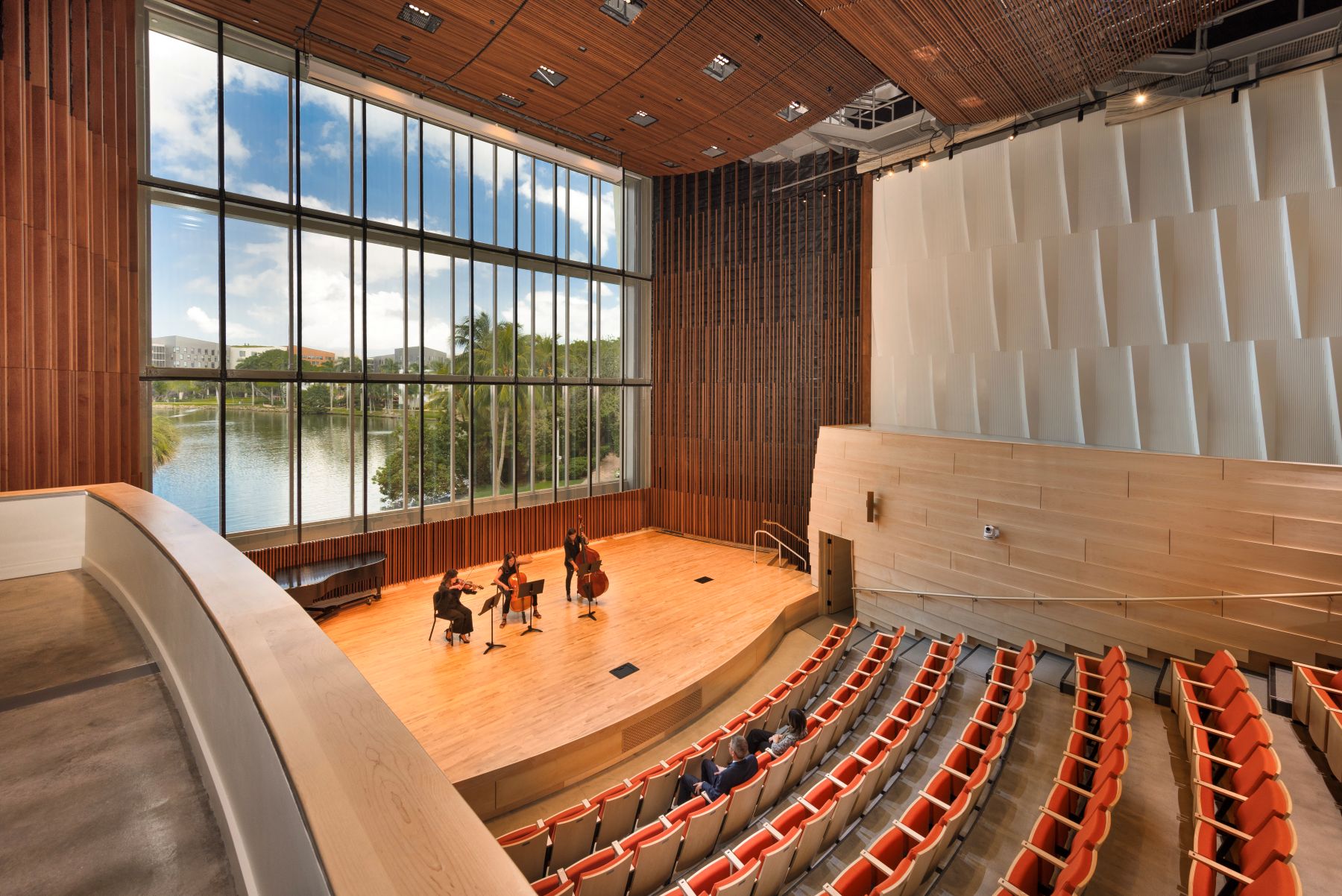
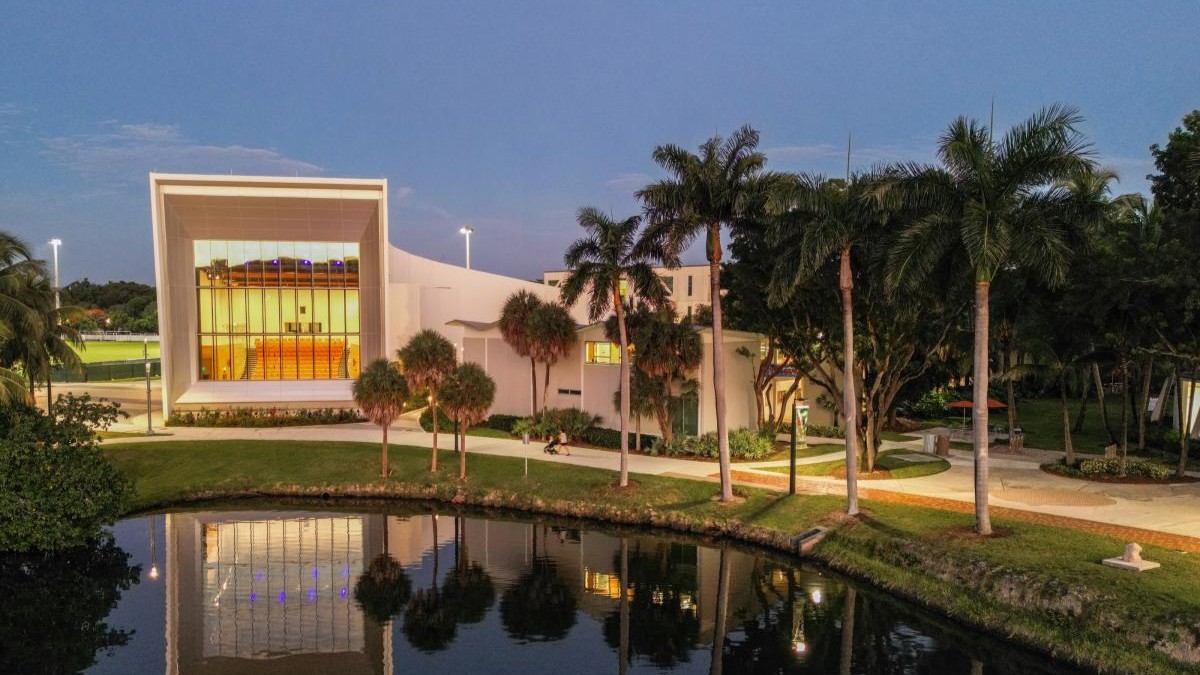
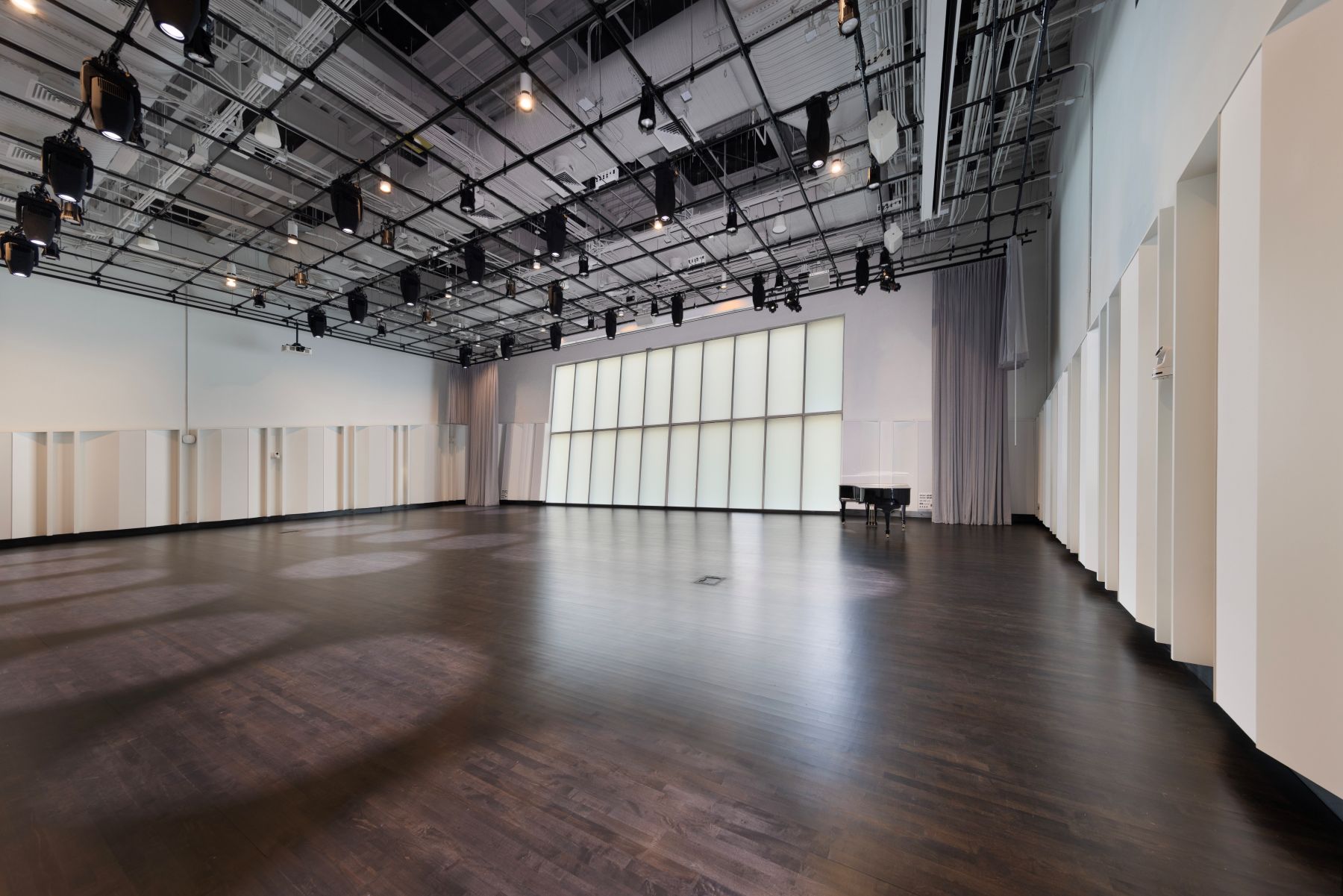
The hall seats about 200 around a stage for some 35 musicians, with side parterre seats overlooking the performers. Its most distinctive feature is a large upstage soundproof window framing Lake Osceola and the lush campus beyond — natural light and a living vista admitted into a room that elsewhere would be sealed. Adjacent, the Hormel Innovation Stage is a flexible black-box-style space for 80-plus musicians in rehearsal and for forward-looking programming, fitted with advanced recording, lighting, and broadcast technology, including wall-cast and live-projection systems.
Acoustics as Architecture
The acoustic design is a collaboration between architecture, theater planning, and acoustics rather than an engineering layer added afterward — H3’s consistent approach to treating acoustic design as an architectural decision. Massive concrete walls, floor, and roof exclude the outside world; the upstage windows are acoustically tuned with integral airspaces that isolate sound while admitting daylight. An automated system of movable banners and adjustable onstage elements lets the Newman Hall shift from the live resonance of chamber music to controlled acoustics for amplified or contemporary work, and the Hormel stage tunes from live to fully controlled for large-ensemble rehearsal. The hall is, in effect, a responsive instrument of the Frost School.
Of Its Campus and Its City
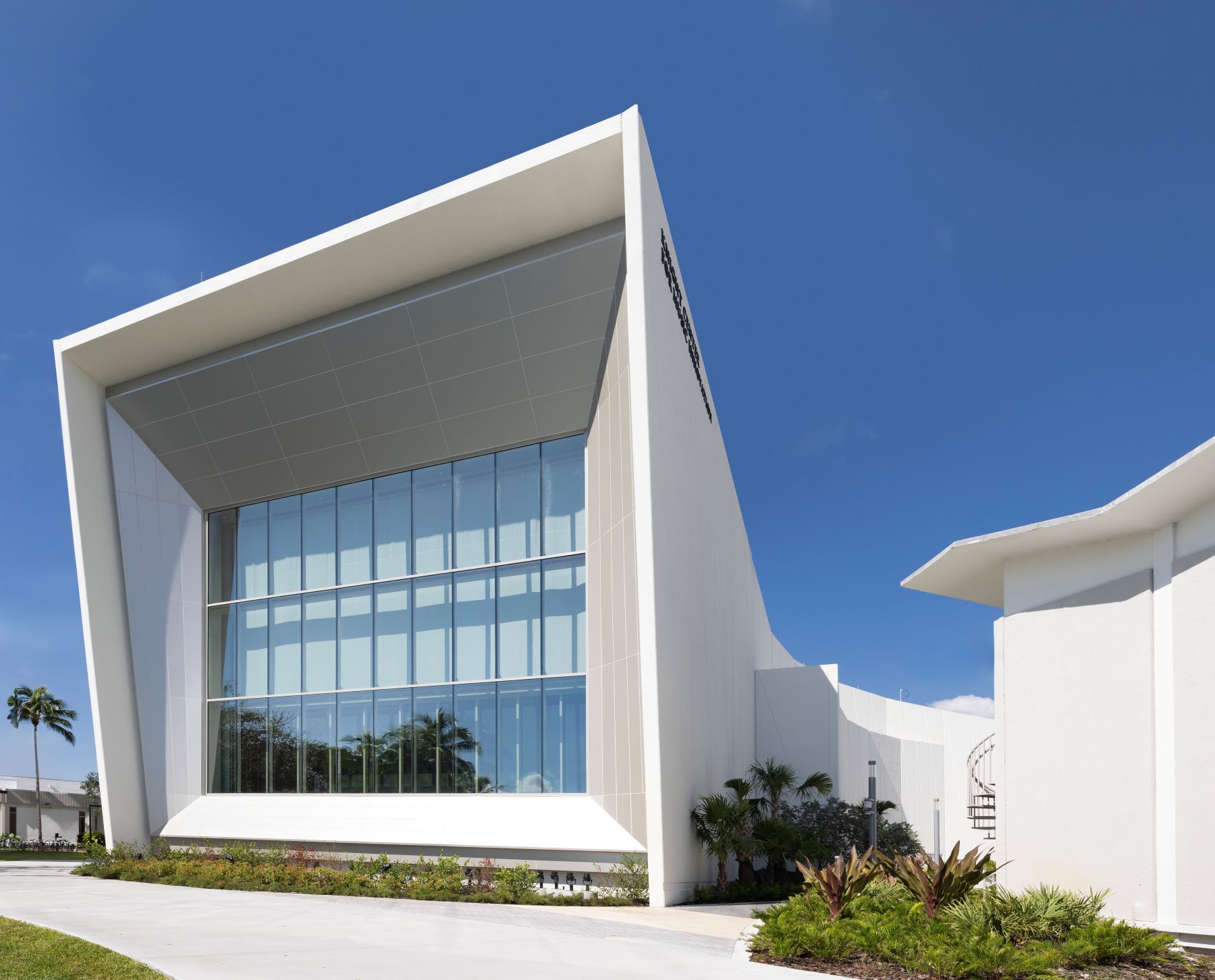
The building respects the mid-century modern architecture around it and addresses the lake, landscape, and pedestrian path that cross its site. A glass-clad ground-floor lobby brings the tropical campus and Lake Osceola into the interior, and the landscaped Newman Plaza becomes a welcoming gathering point that strengthens the university’s connection to both the Coral Gables campus and the wider Miami community. A twenty-by-forty-foot LED window-cast system, and a giant exterior wall facing the intramural fields, let the building broadcast headline performances outward — making the school’s work visible to the public it serves. The Frost School is home to the university’s first LEED Platinum facility; the Knight Center continues that commitment, pursuing LEED Silver.