When the New Amsterdam Theatre opened in 1903, Times Square — then Longacre Square — was on its way to becoming the heart of theater in New York. Designed by Herts & Tallant, the premier theater architects of their day, it was their finest New York house and their most famous, celebrated for both its architectural exuberance and its technical daring. From 1913 to 1927 it was home to the Ziegfeld Follies, its stage host to Will Rogers, W. C. Fields, Eddie Cantor, Fanny Brice, and Fred and Adele Astaire. By the time H3’s predecessor firm began work, that history had nearly vanished.

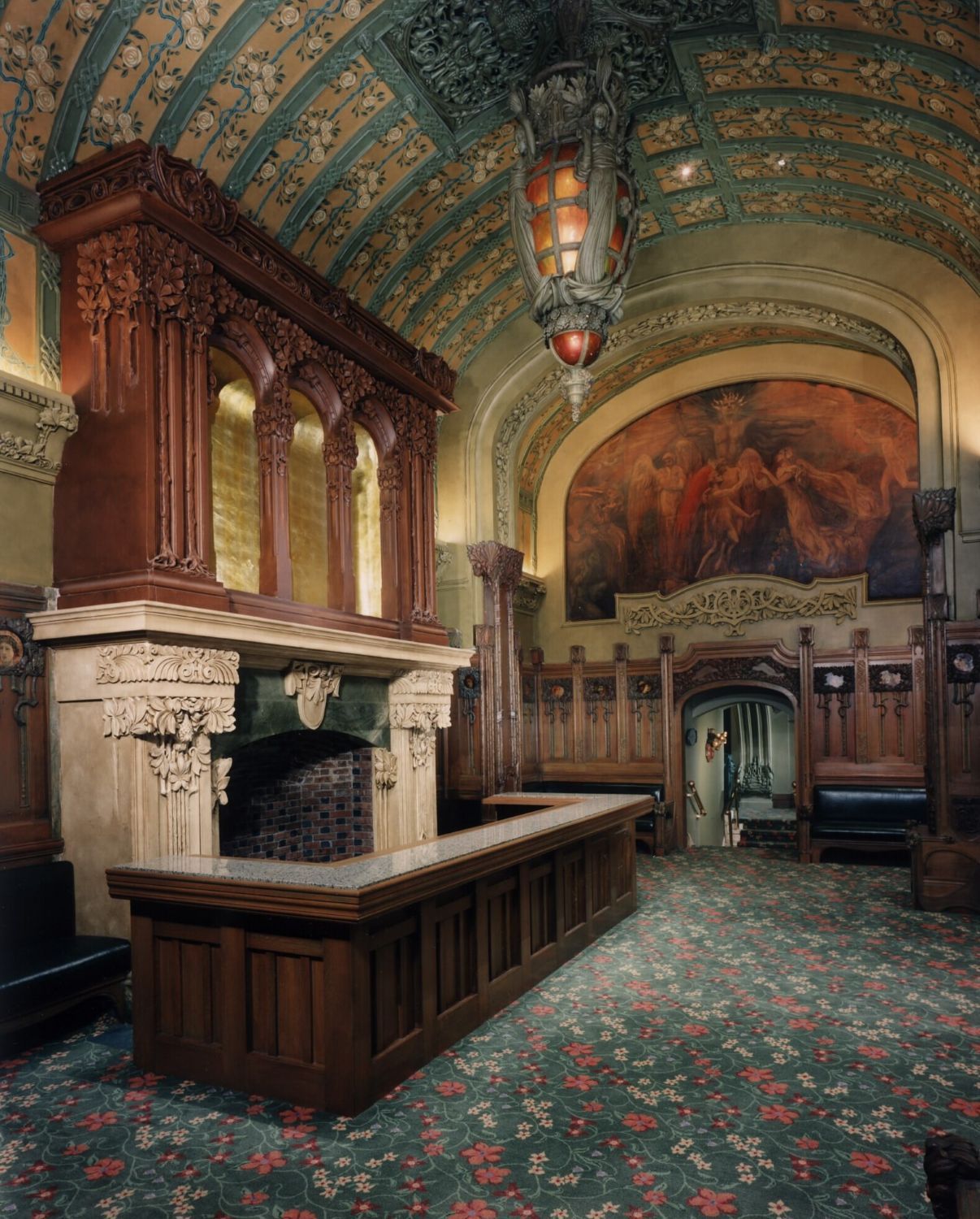
The theater was lauded at its opening as the first building in the United States to employ Art Nouveau decoration. It is not Art Nouveau in the truest sense — rather an eclectic expanse of fanciful ornament: plaster relief panels of scenes from Shakespeare and Wagner, murals of Creation and Inspiration, terra-cotta panels on themes like Progress, and an abundance of floral and foliate detail. Its color scheme — a delicate pastel of mother-of-pearl, violet, green, pink, and ochre — broke sharply from the red and gold standard to theater decoration of the time. One critic likened entering the auditorium to a glance into fairyland.


What Had Been Lost
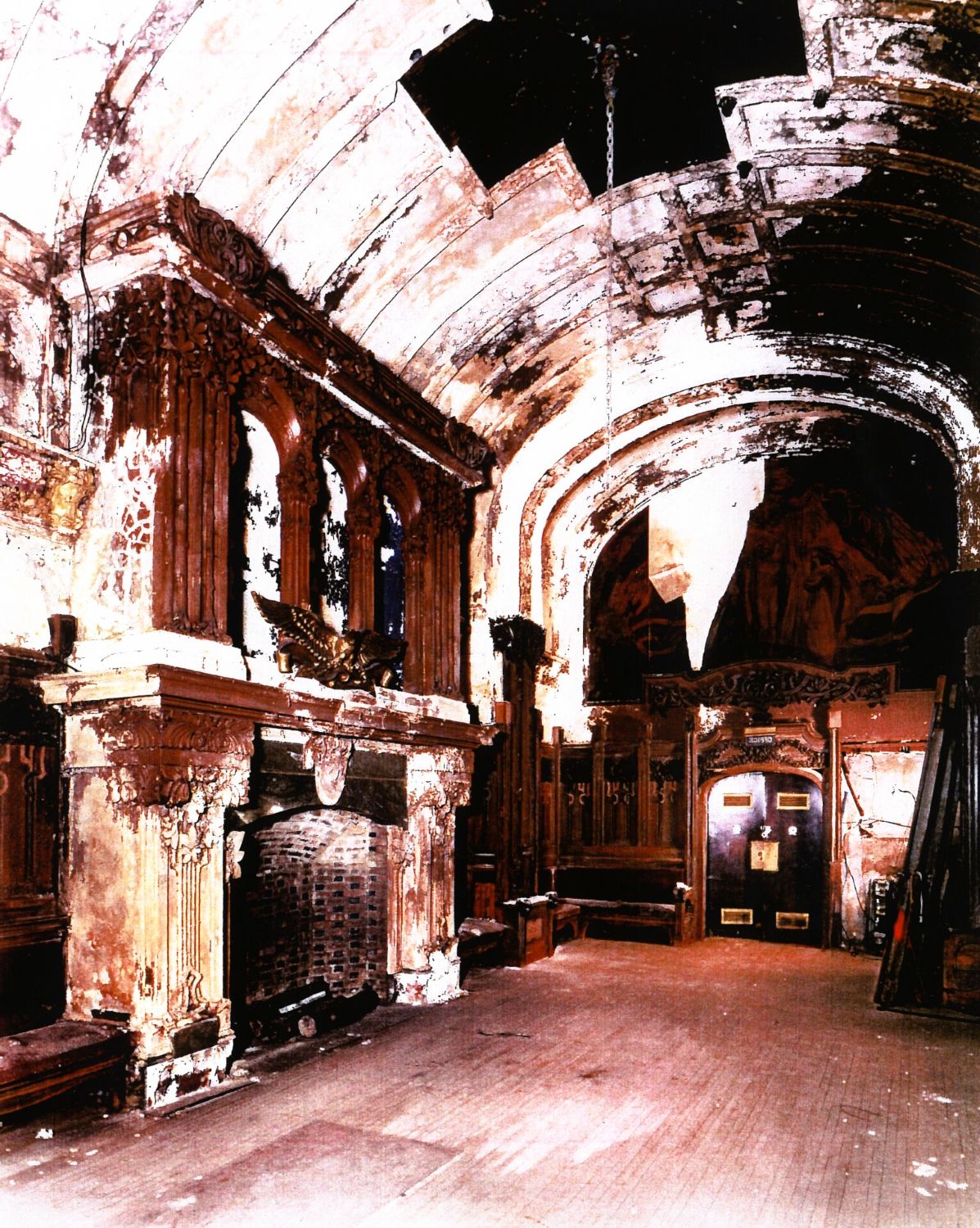
The theater’s condition made its restoration a tremendous undertaking. There had been extensive water damage to plaster, wood, painted decoration, and to the structure itself. Less than a quarter of the original decorative scheme remained intact, and what survived had been painted brown to cut glare on a movie screen. The seating boxes — each originally named for a different flower — had been removed in the 1950s to make room for a wide screen. The first task was simply to stop the building’s decline: repairing the roof and windows to halt water seepage, and installing temporary heat to drive out the moisture already inside.
Interpretation, Not Replication
Restoring a building with so long and layered a history raised an unavoidable question: which New Amsterdam was the true one? Should it return to its pristine 1903 condition? To its 1913–1936 heyday as the home of the Follies? Should the 1937 Art Deco marquee be stripped away to recover the original 1903 façade? H3’s answer followed Hugh Hardy’s central conviction about historic buildings — that preservation should interpret history rather than reproduce it. As Hardy often cited Ada Louise Huxtable, an authentic reproduction is a genuine oxymoron; a copy is still a copy, however skilled its intentions.
The goal was a seamless whole that acknowledged the passage of time — a theater that felt well cared for, not one pretending any single moment of its life was the only one worth remembering.
— H3 Hardy Collaboration Architecture
The work combined science and scholarship. Paint analysis, historical photographs, and written descriptions established how the theater had looked; mock-ups let the team choose finishes and envision the result before committing. Because much of the plaster ornament had been destroyed, craftsmen re-created it by hand, and sophisticated painting and glazing techniques kept the new work from looking too new. A 1905 description of carpets like the green floor of a forest, heavily sprinkled with small flowers guided the reinterpretation of floor coverings, seat fabrics, and stage curtains.

A Working Landmark for a New Century
Restoration alone would have produced a museum. The New Amsterdam had to work as a contemporary house for large-scale musical performance. Amenities the original never contemplated were woven in: air conditioning, men’s and women’s lounges, mezzanine- and balcony-level lobbies with elevator access. The hardest technical problem in an old theater is rarely the ornament — it is the air. Curved slotted ducts were custom-manufactured to fit above the existing ceiling pattern, so conditioned air could be introduced through the original grillework. The system is invisible; the decorative element the room is admired for became the working register that makes it habitable.


Stage lighting, rigging, sound, and the full apparatus of modern performance were inserted with the same discipline — present everywhere, visible nowhere it would intrude. The technical achievements of the original building, including Herts & Tallant’s pioneering cantilever construction that gave both balconies unobstructed, column-free views, were honored rather than overwritten.

The Rebirth of 42nd Street
The New Amsterdam’s restoration was not an isolated act of preservation. It was the keystone of a public-private partnership that catalyzed the rebirth of 42nd Street, the project most responsible for returning Theater Row to its place among New York’s premier entertainment destinations. It demonstrated a lesson H3 has carried into civic work across the country: a single, fully realized cultural building, restored with conviction, can change the economic and cultural trajectory of an entire district.
