H3 was engaged by the City of Greensboro and the Community Foundation of Greater Greensboro to lead a highly compressed, publicly interactive process: develop concepts for a new 3,000-seat theater, determine the best location to site it, and refine a capital cost estimate. The hall had to do many things at once — present symphony performances, lectures, rock and pop concerts, children’s programming, and touring Broadway. Every seat needed excellent sightlines; the acoustics and lighting had to be best in class.
The Site a City Chose to Build
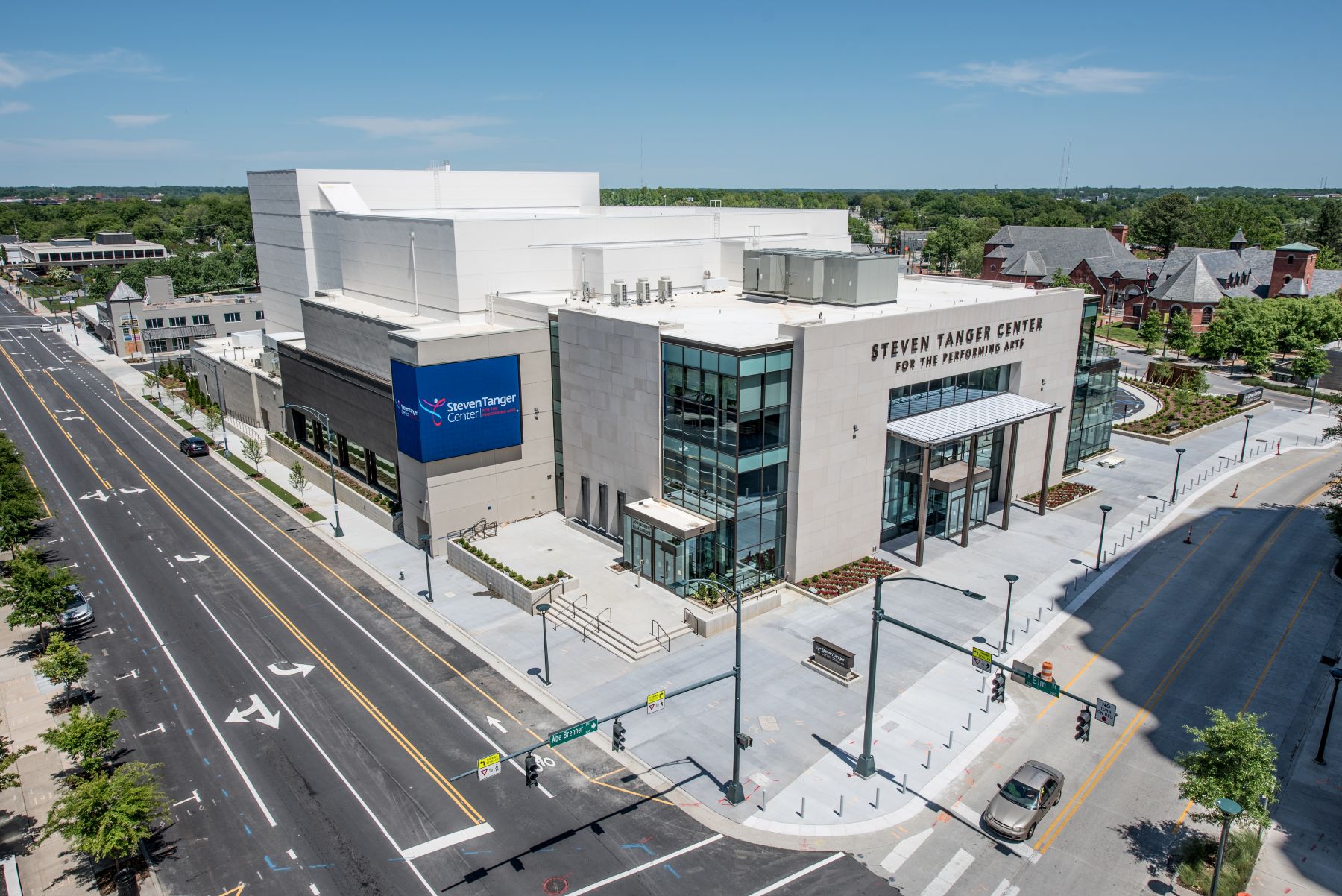
An initial concept was developed on a city-owned parcel from planning-charrette recommendations. Philanthropic fundraising by the Community Foundation then allowed the team to study a wider set of sites, evaluated against four criteria — circulation and traffic, neighborhood potential, site issues, and building configuration — with subcategories from parking and access to land-acquisition cost, each weighed through a balanced-scorecard approach.
The optimal site was not owned by the city. It scored so high on every other measure that Greensboro decided to pursue acquisition, assembling the properties to give the Tanger Center a permanent home. H3’s concept for a 3,000-seat, 105,000-square-foot fully flexible arts center was approved, and the firm was retained to lead design and construction. City observers later called the result both boldly ambitious and fiscally conservative — a pairing H3 treats as the measure of a civic project done right.
One Hall, Many Performances
Rather than build two separate venues each customized to a single program, H3 gave the $90 million facility the technological flexibility to be the optimum environment for many kinds of performance without compromising the integrity of any of them. The Meyer Constellation acoustic system — the largest installation in any venue in the country — adapts the room to whatever is playing in it, from a symphony to a lightly amplified touring show. Flanking the proscenium, two fifteen-by-forty-foot LED screens extend views of the artists or build the mood of the program.
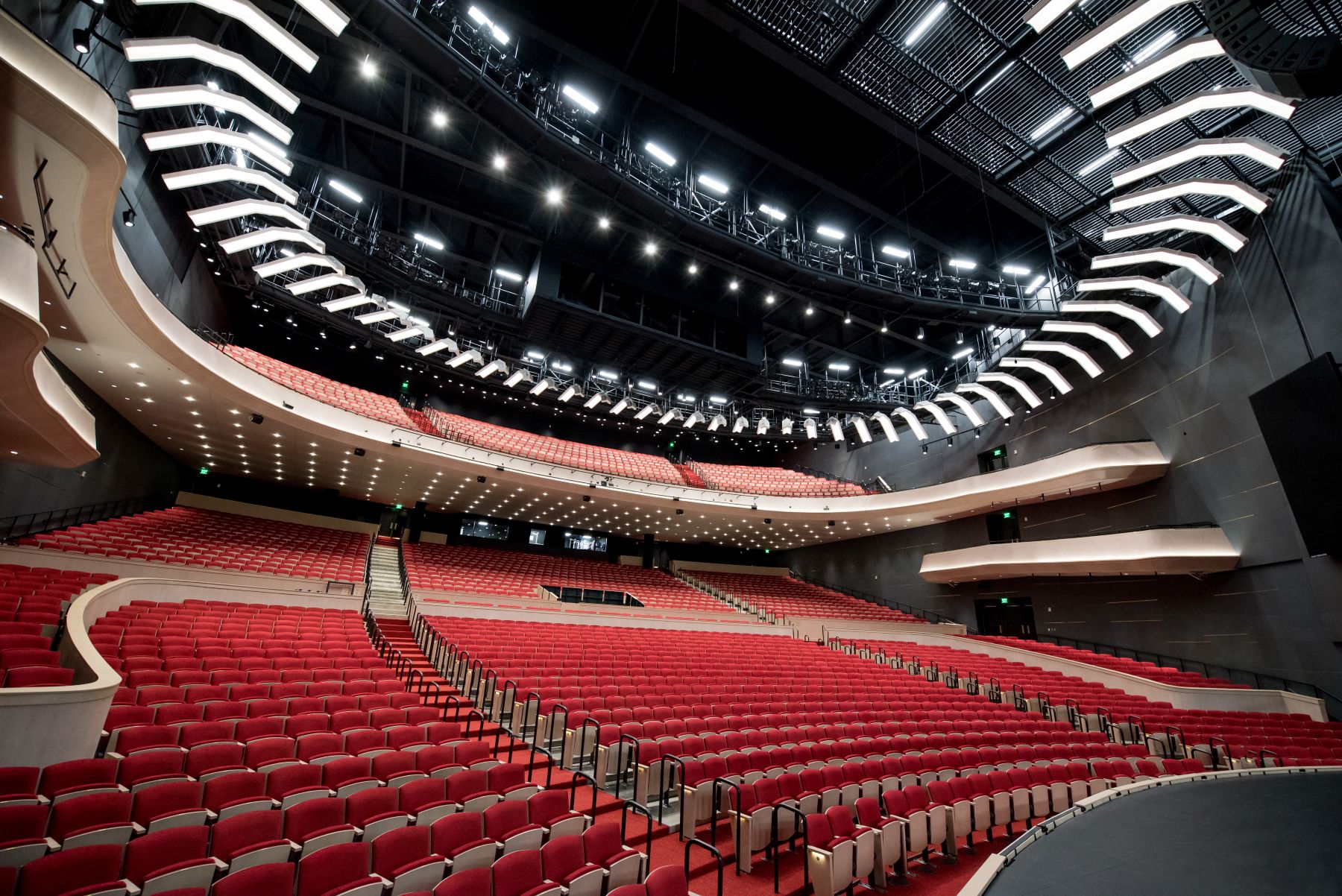
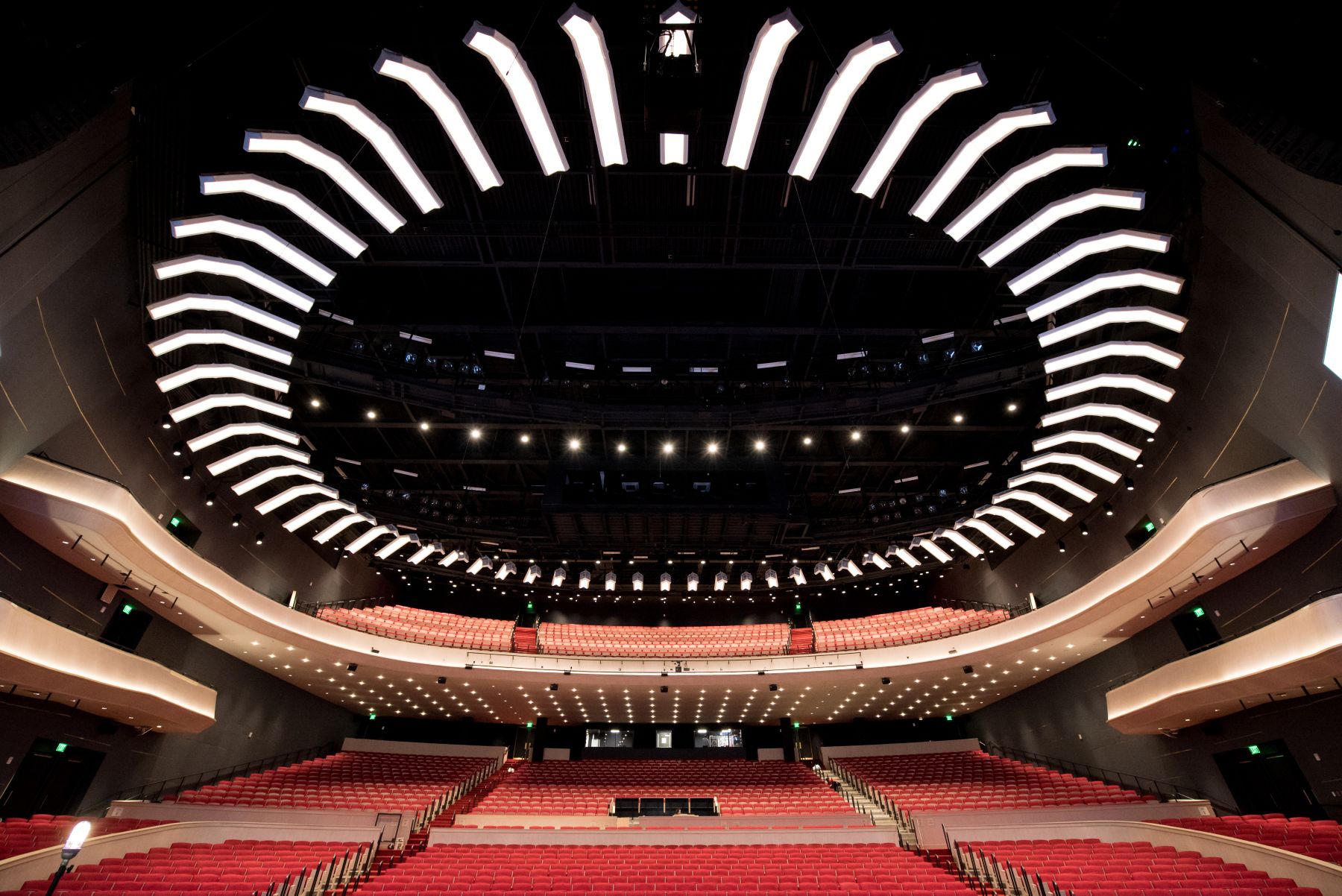
The seating bowl holds 3,023 across three levels — the largest theater in North Carolina — yet feels surprisingly intimate. More than eighty percent of the seats in the upper tier and orchestra fall within the industry-standard cone of view for touring Broadway. The walls are a warm neutral grey enlivened by randomly placed inset gold channels; the seat fabric, woven locally in the Triad region, carries Lurex filaments that catch the light. Near the ceiling, the Schiffman Ring of Light is a modern descendant of the European opera-house chandelier, computer-controlled to count down to showtime.
Civic Identity, Built of Place
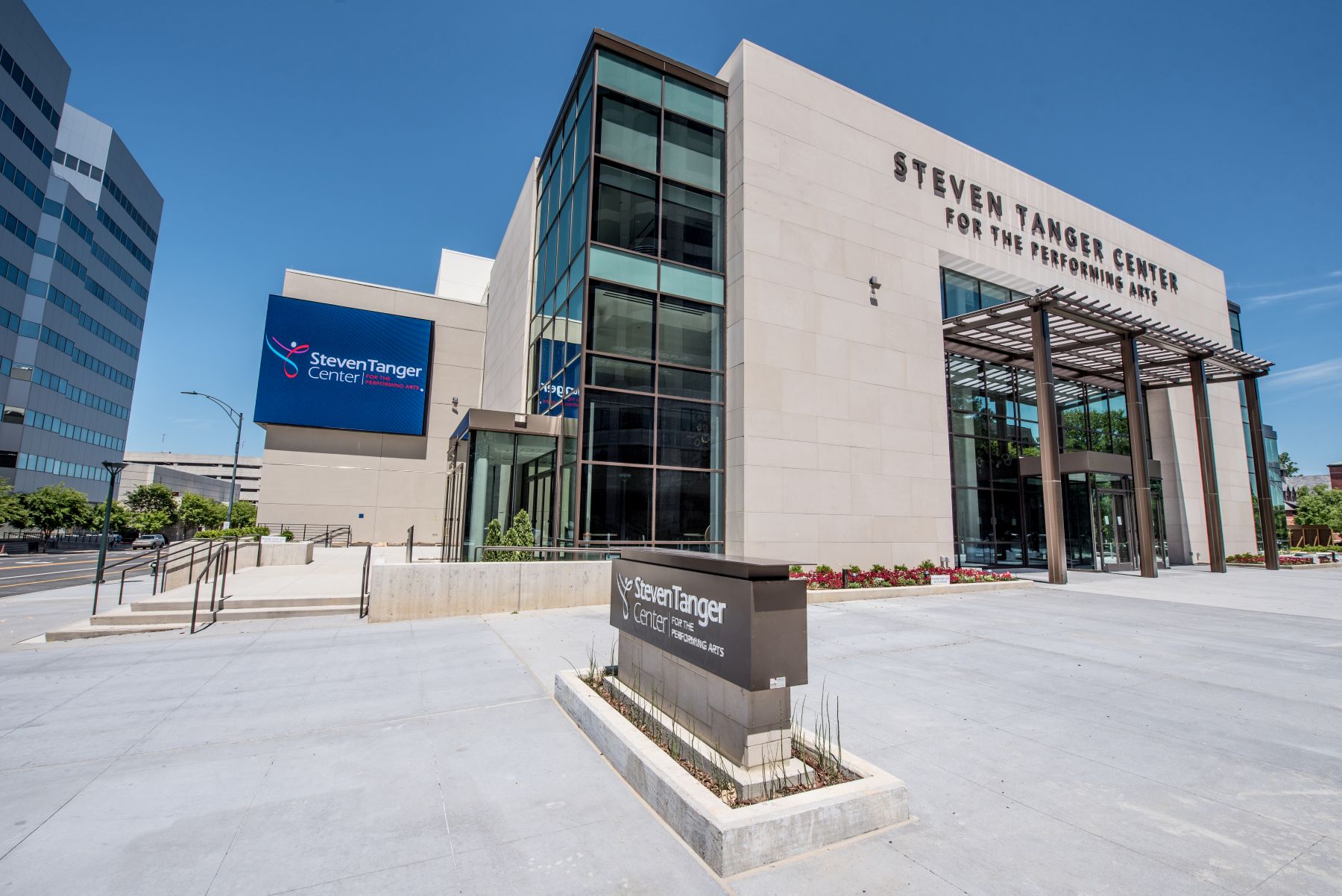
Arrival announces the building’s civic role. The Tanger Center joins the Greensboro Arts District alongside the Historical Museum, the Public Library, and the Cultural Center, with the Community Foundation’s new LeBauer City Park as the district’s centerpiece. The exterior is composed of Indiana limestone and North Carolina Mt. Airy granite — the same materials as Greensboro’s Guilford County Courthouse, post office, and Jefferson-Pilot Building — so the new hall reads as belonging to the city’s civic lineage. Large bronze-mullioned curtainwall and three-story glass corners reveal the activity inside and frame views of the city from within. The 8,000-square-foot Phillips Hall lobby, hung with Mabel Poblet’s suspended sculpture Genesis, a mezzanine gathering hall, and a rooftop terrace overlooking a Janet Echelman sculpture in LeBauer Park turn intermission into an event in itself.
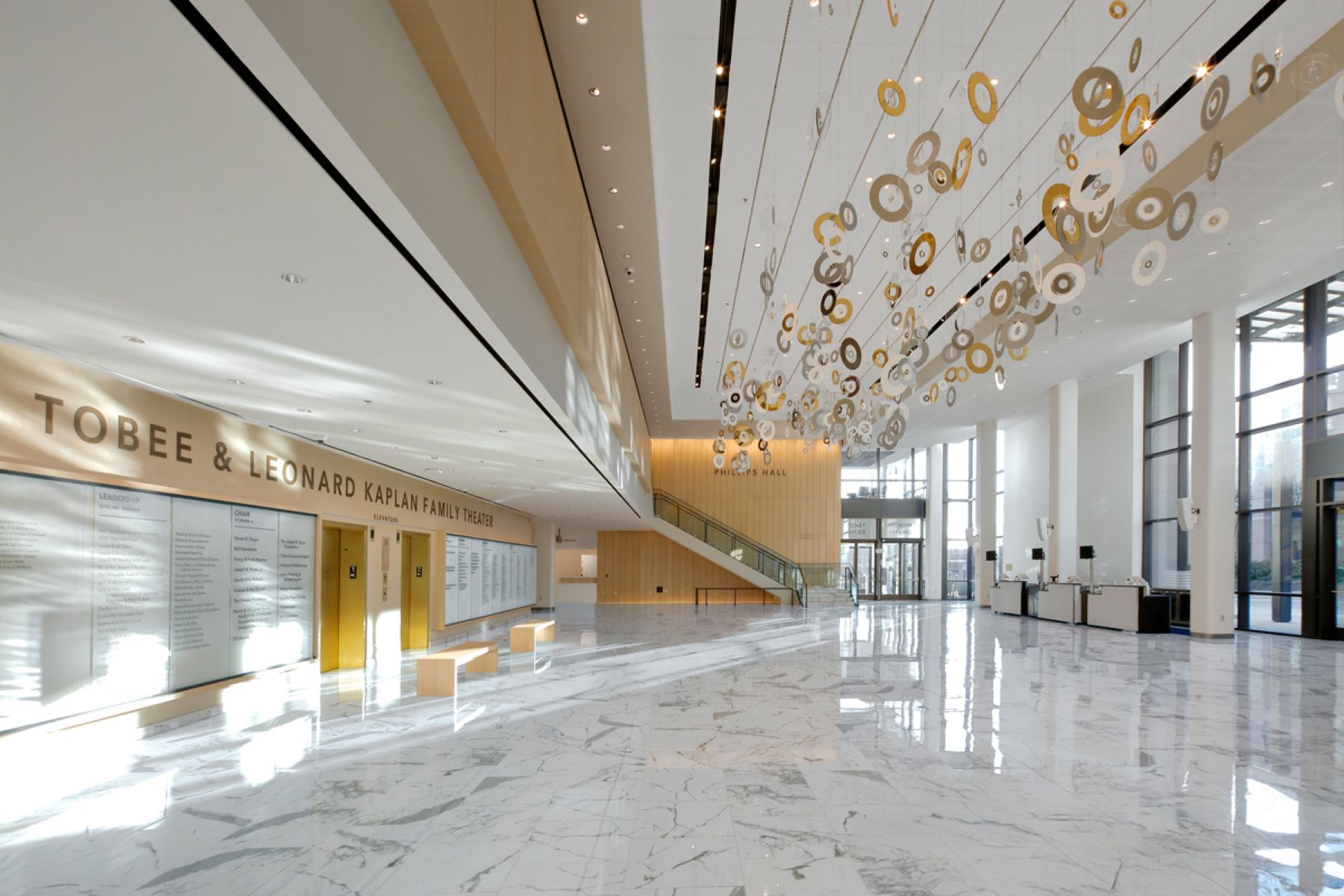
A Catalyst for the Region
The Tanger Center’s grand opening, intended for March 2020, was delayed by the pandemic and finally arrived in September 2021. Within its inaugural year it hosted more than 415,000 patrons across 203 events — including 88 sold-out shows — and added 17,414 Broadway season ticketholders, an industry record for a new venue. A three-week run of Hamilton, multi-week runs of The Lion King, and a run of Wicked that drew over 66,000 patrons generated tens of millions in regional economic impact.
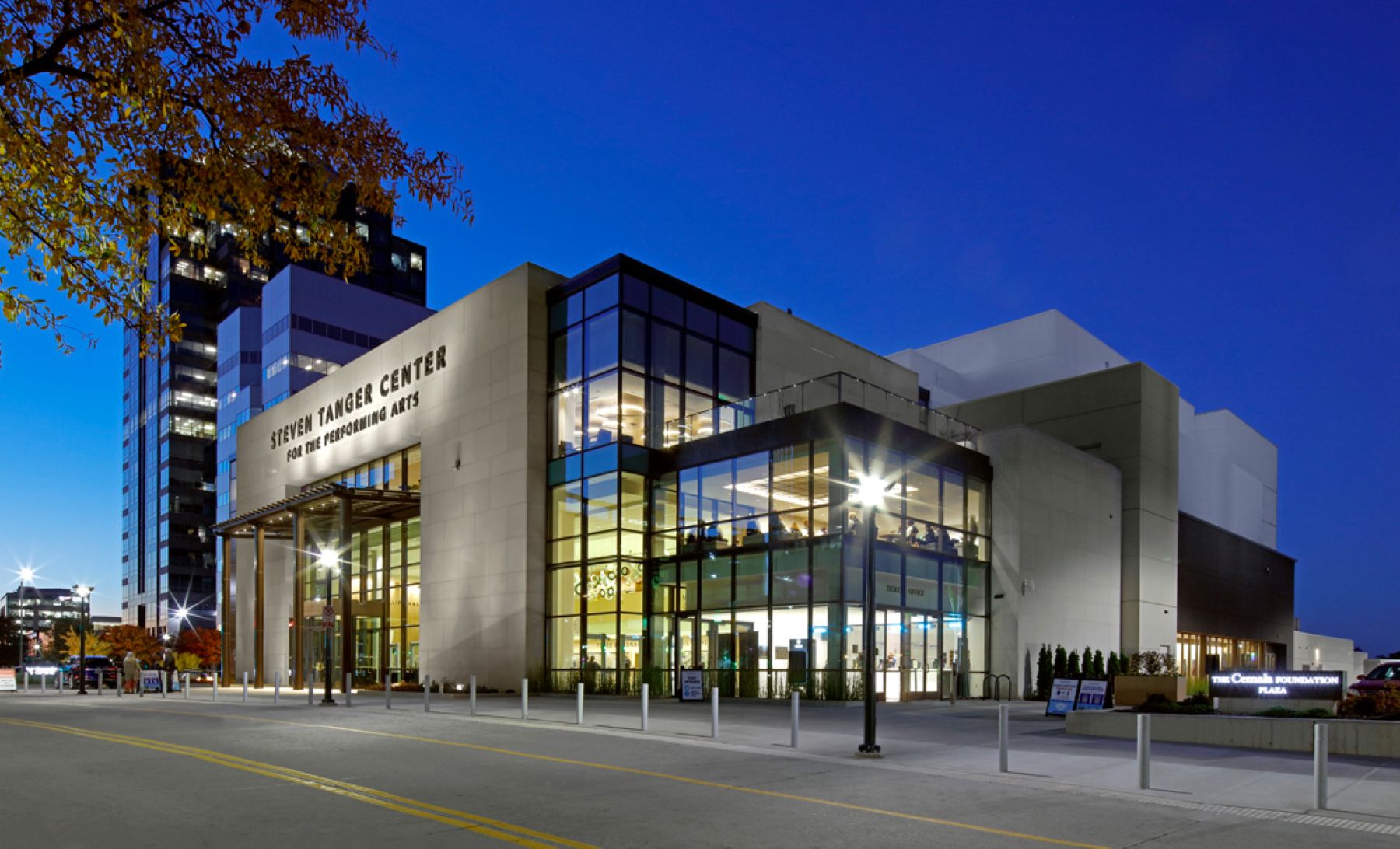
The hall has transformed downtown Greensboro, bringing capacity crowds to restaurants, hotels, and small businesses, improving the quality of life for the community and proving — as H3’s civic work consistently does — that arts infrastructure designed with economic and community impact in mind from the start pays that investment back for decades.