
Theatre for a New Audience had spent its life as an itinerant company, performing the classical repertory in borrowed rooms. Its new building in the BAM Cultural District — the Polonsky Shakespeare Center — gave it a permanent home built precisely for its work: a laboratory for the modern theatrical interpretation of classical plays. The result is a building whose simple exterior form belies its structural complexity and the intricacy of its acoustic isolation from the city’s street and subway noise.
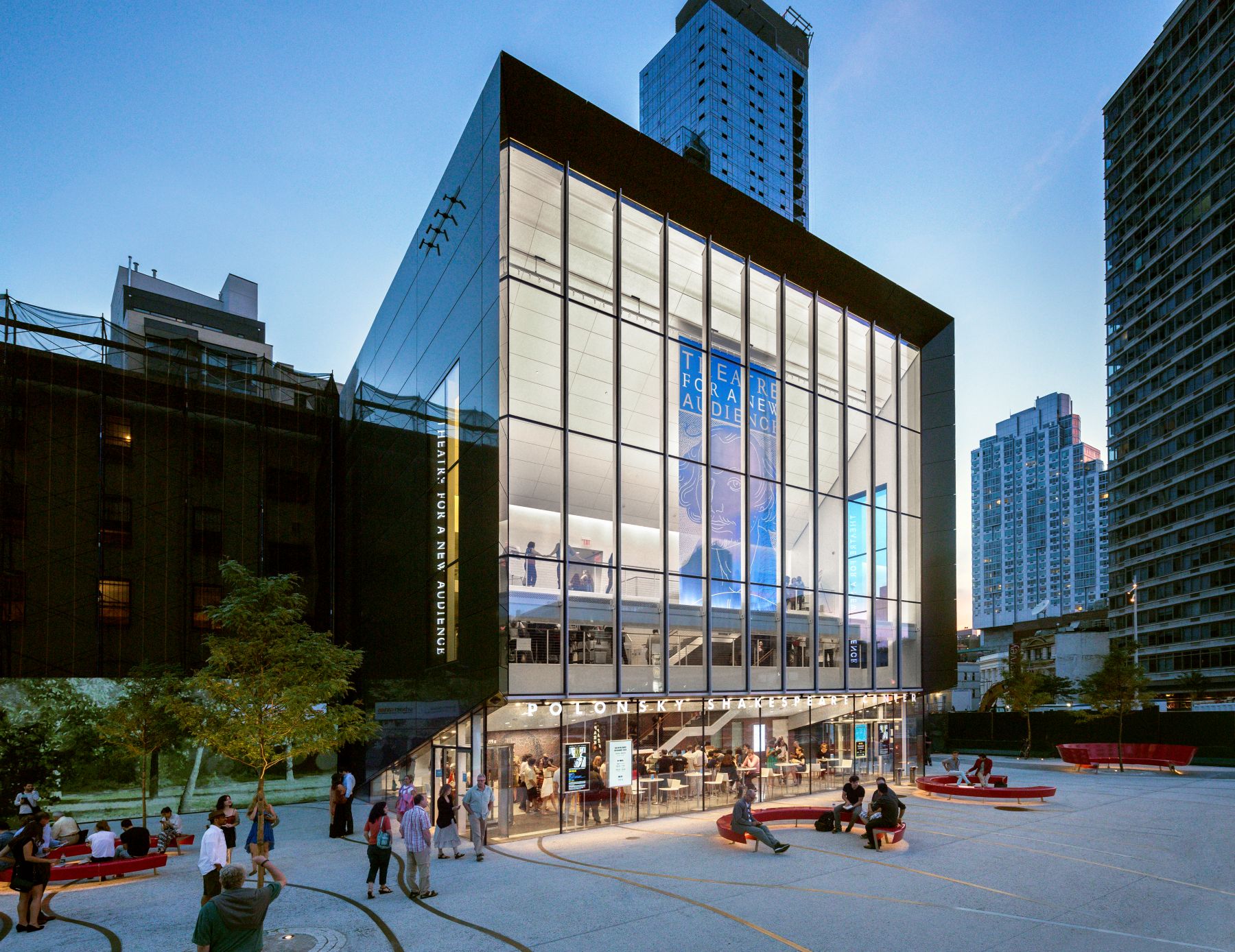
The volume projects outward from its site, the second-floor lobby dramatically cantilevering over the main entrance to create a nearly seamless connection between the lobby and the arts plaza wrapping the front of the building. Cloaked in gunmetal-grey metal panels, the exterior reads as a seamless, opaque surface — set in deliberate contrast to the front façade’s glass curtainwall, suspended from above.
From Street to Seat
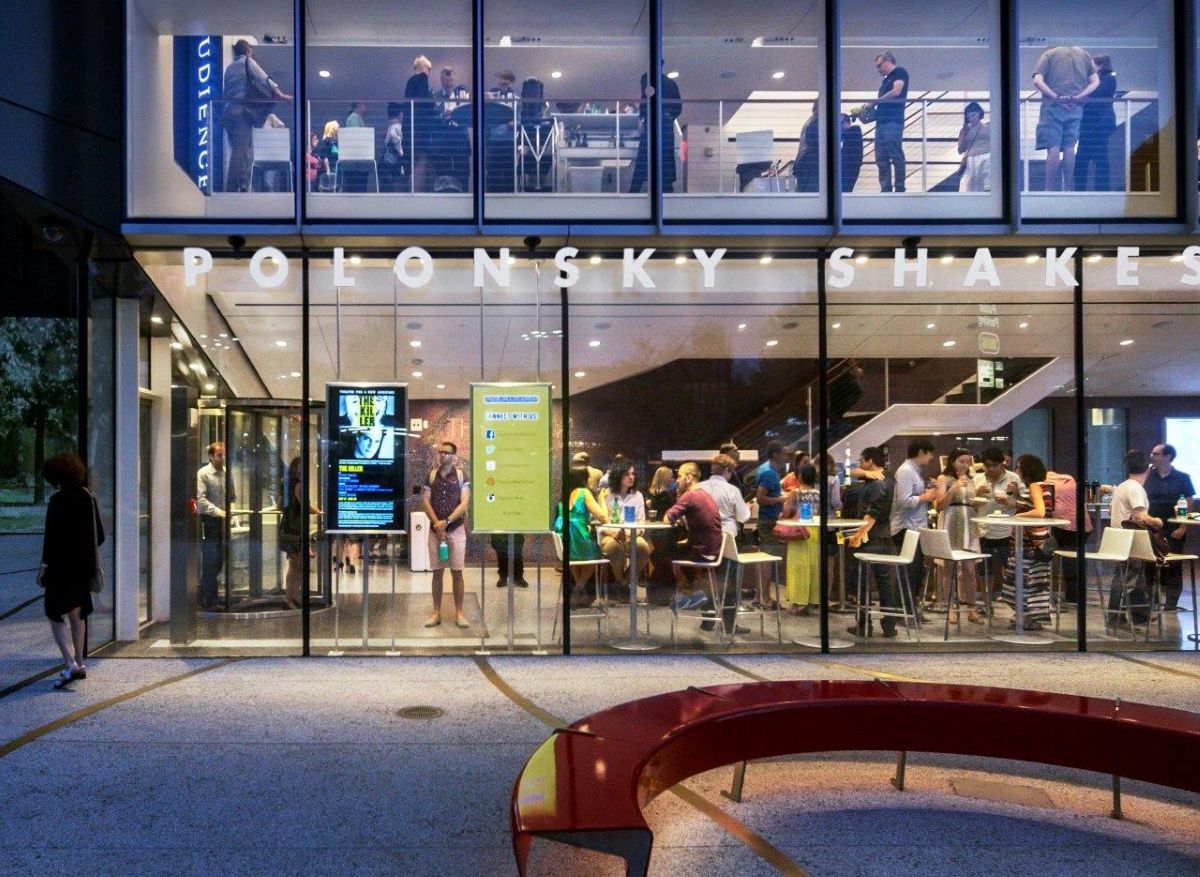
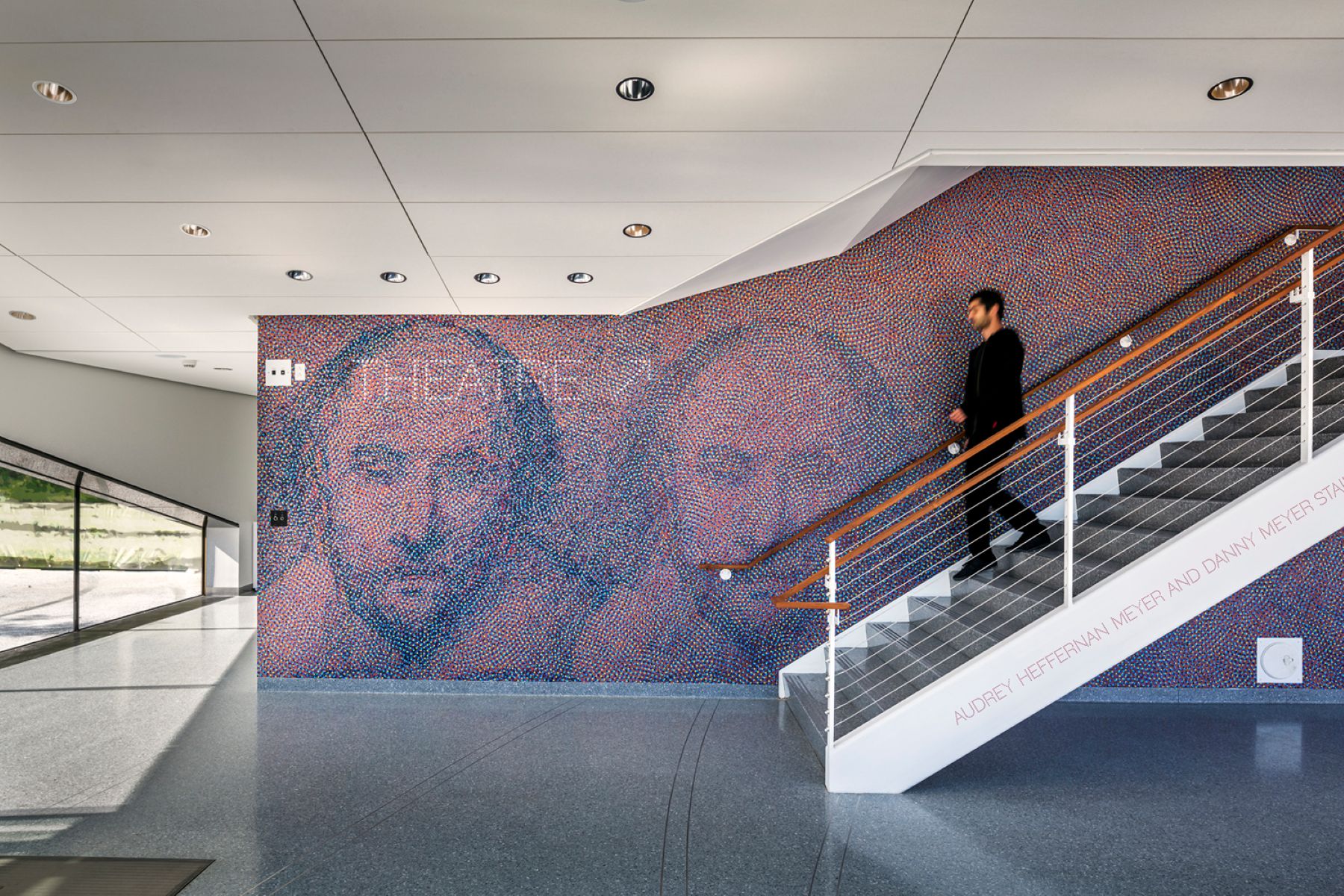
Visitors enter at the ground floor, following the serpentine pattern of the exterior plaza into a tall, bright lobby. A central stair lifts them to wide views back across the plaza and out to the neighborhood. Here, before they ever reach the theater, the audience becomes part of the performance to those on the street below — the building’s life made visible, an idea H3 has since named the architecture of anticipation. Then they enter the Mainstage from the second floor, and the experience inverts.
The Ultimate Black Box
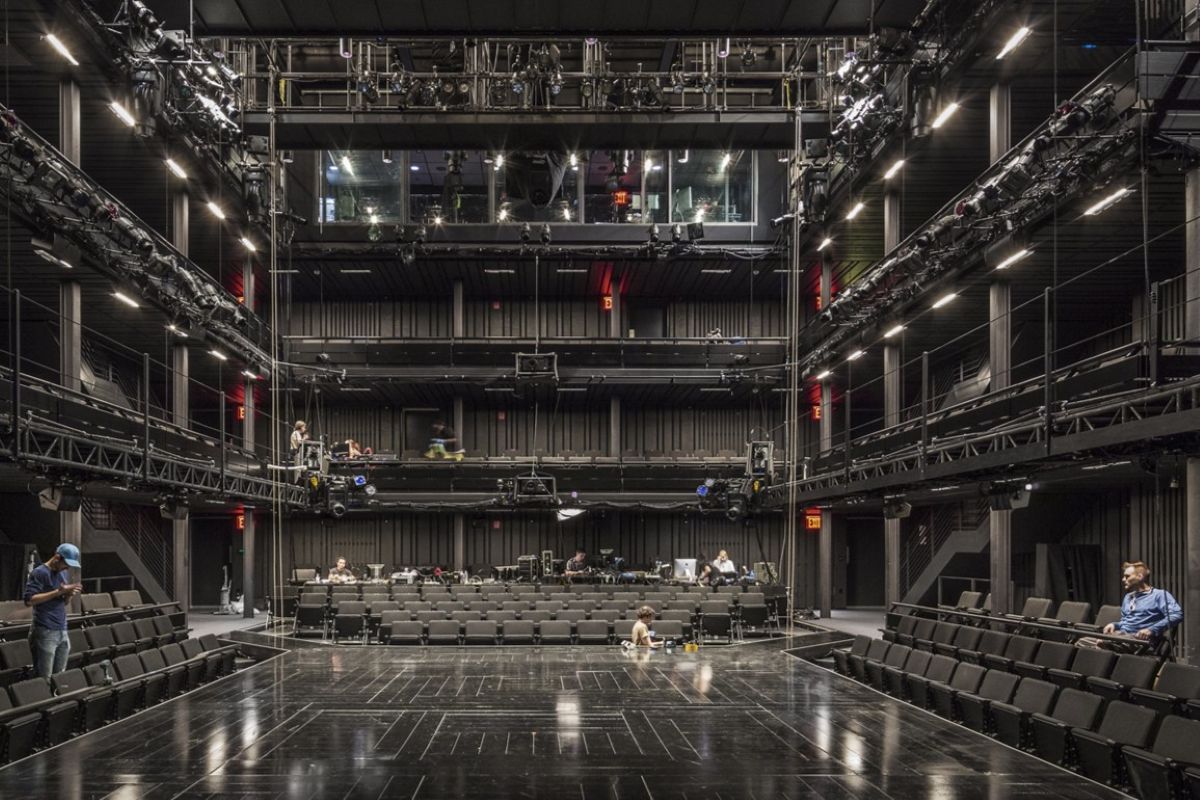
The intimate darkness of the 299-seat proscenium Mainstage is a stark contrast to the soaring lobby. The finishes and furniture are all black — no visual distraction from the activity on stage. Seating on three levels, the orchestra and two low balconies, brings the audience close to the performers and reconfigures for changing productions.
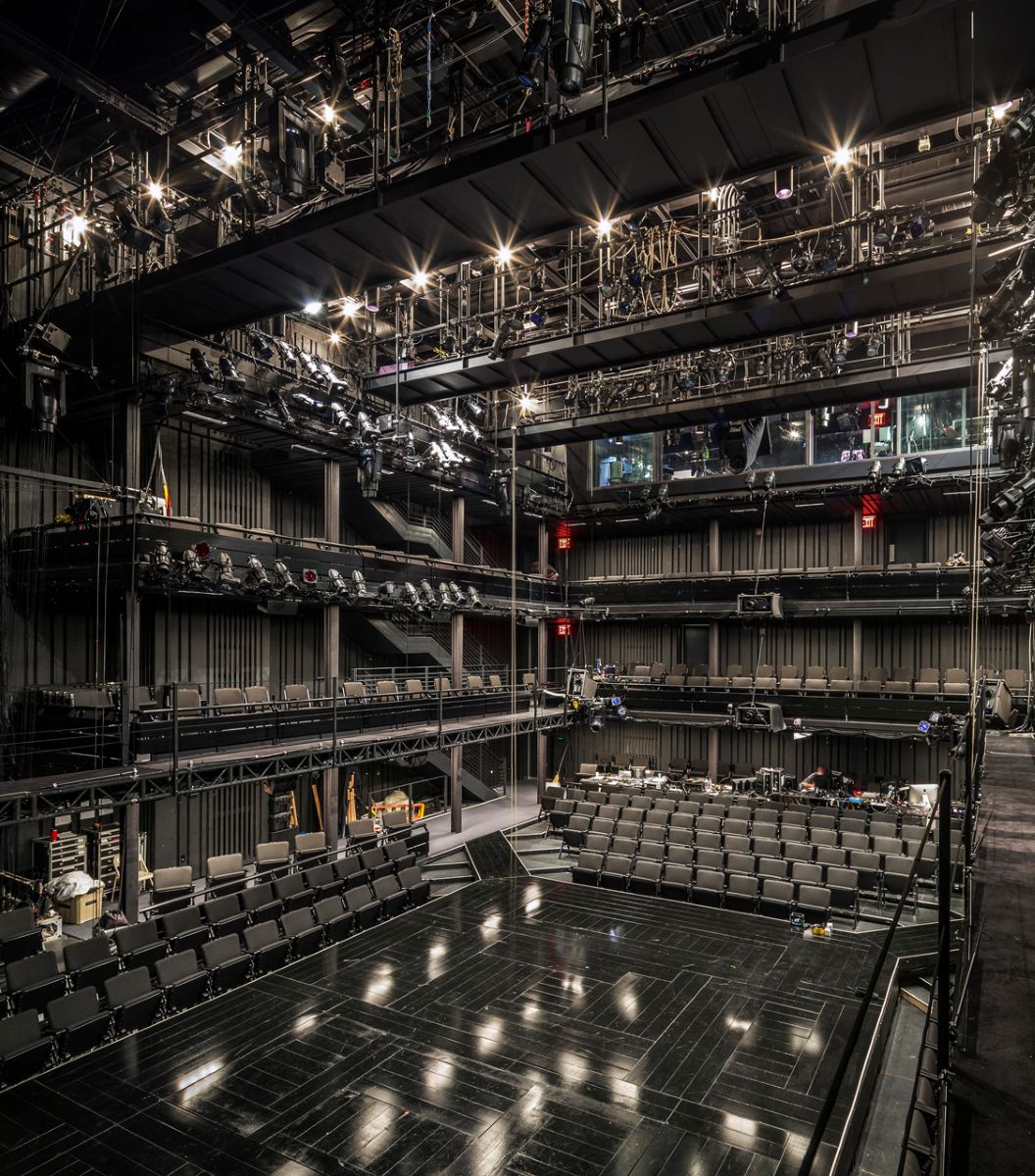
All of the Mainstage’s elements — its configuration, acoustics, sightlines, and uniformity of color — combine to create a level of intimacy between audience and performer.
— Hugh Hardy, FAIA, Founding Partner, H3
That intimacy is the whole purpose of the room, and it is the quality TFANA’s leadership singled out: a level of intimacy between audience and performer that the company regards as the ultimate black box theater. The reconfigurable seating means the same room can serve a thrust staging of a tragedy and a proscenium staging of a comedy without compromise to either.
Quiet Technology, Visible Restraint
The building incorporates industry-leading, energy-efficient LED lighting throughout — rare in a theater of its type — and was designed for a high LEED rating. As with all H3 theaters, the technical apparatus is comprehensive and largely unseen: the acoustic isolation that holds the city at bay, the systems that let the room change character, the infrastructure that supports a professional company’s full production demands. Like the company it houses, the building makes a powerful yet nuanced new presence in the BAM Cultural District — a dramatic architectural statement that remains, deliberately, a subdued platform for the work on its stage.
